
The Fed’s Inflation Gauge Is Stuck in No Man’s Land
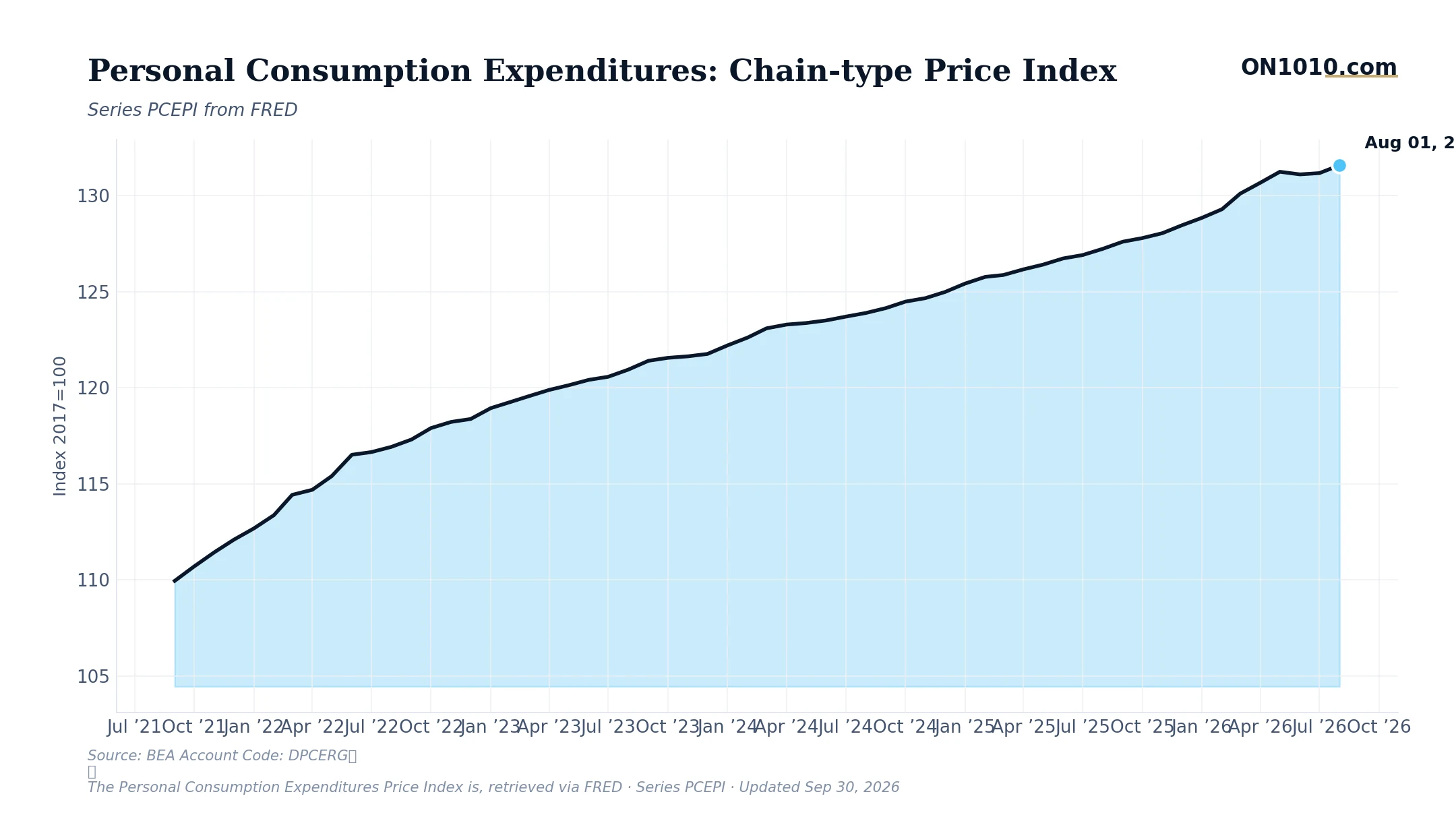
The PCE price index rose 0.31% in August, putting the year-over-year rate at 2.97%. That number is close enough to the Fed’s 2% target to feel encouraging, but far enough away to keep policymakers from declaring victory.
Here’s the part worth paying attention to. Inflation has not fallen below 2.97% year-over-year since early in this cycle, and the monthly trend tells a choppy story: prices dipped in June, ticked up in July, fell slightly, then rose again in August. That’s not a clean downward path. It’s inflation that has stopped falling without quite landing where the Fed needs it.
The broader dashboard makes the picture more complicated. Core inflation is running higher than roughly nine out of every ten months on record, even as consumer sentiment sits near the bottom of its historical range. That combination, hot prices and sour consumers, has historically described an economy where the inflation tax is doing real damage to household purchasing power, even if aggregate spending numbers look stable. Long-term interest rates are elevated by historical standards, which raises the cost of everything from mortgages to business expansion loans.
In past cycles, when the Fed’s preferred inflation measure stalled in the 2.5% to 3.5% range for several months, the debate shifted from “when do rates come down” to “do rates need to go higher.” Businesses running capital allocation decisions have generally used these periods to stress-test their financing assumptions. Historically, when inflation stayed sticky at this level, rate relief arrived later than consensus expected.
Bottom Line: The Fed is watching the same monthly zigzag you just read. At nearly 3% inflation with no clear downward momentum, the question for the rest of 2026 is whether “close enough” is ever actually close enough.
Source: Federal Reserve Economic Data (FRED)
ON1010 Research is an independent publisher of economic education and is not a registered investment adviser, broker-dealer, or investment company. This content is for educational and informational purposes only and is not investment advice or a recommendation to buy, sell, or hold any security. Published under the publisher exemption recognized by Section 202(a)(11)(D) of the Investment Advisers Act of 1940 (Lowe v. SEC). Always consult a qualified financial professional before making any financial decision.
Free Research
The economy moves fast. We make sure you move faster.
Economic data, policy shifts, and market signals — delivered to your inbox.
Subscribe Free