
The Gap Nobody Is Pricing: Real Rates Are Tighter Than They Look
Core inflation is still running hot by historical standards, yet most market commentary treats today’s rate environment as if the Fed is nearly done. The bond market disagrees, and the math backs it up.
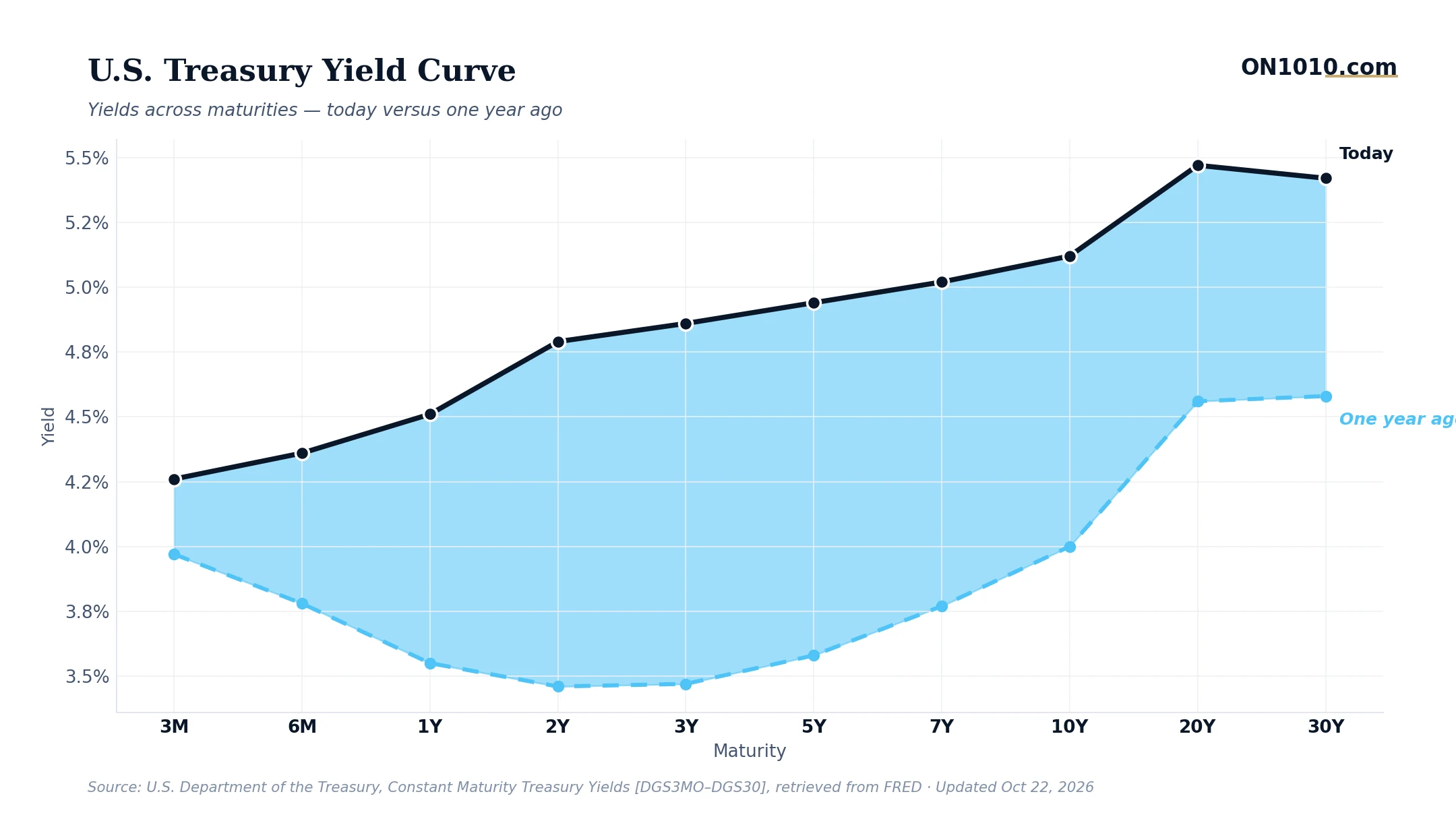
The 10-year Treasury yield sits at 5.12%, which is 112 basis points above the Fed’s policy ceiling of 4.0%. The 10-year breakeven inflation rate, which is what bond investors expect inflation to average over the next decade, is 2.37%. Subtract that from the 10-year yield and you get a real rate of roughly 2.75%. The economic gauges confirm the picture: core inflation is in the upper quarter of its historical range, monetary policy is already restrictive by historical standards, and credit spreads are widening. The S&P 500 closed at 7,757 Wednesday, up 0.58%, but under the surface the rotation tells a different story. Consumer staples are beating the index by 5.3 percentage points over the past month, and health care by 5.4 points. Technology is trailing by 3.9 points. Stocks rose; institutional money moved toward defense.
On deck today: watch for any Fed speaker comments and any fresh labor or inflation data that crosses the wire, because the employment and inflation beats have been quiet this week and any new read will land in a market already sensitive to rate signals.
The question to hold onto is this: when real rates are this elevated and credit spreads are simultaneously widening, what does that incentive structure say about business investment decisions in the next two to four quarters?
Sunday’s Long View is already digging into what historically elevated long-term rates have meant for the broader economic cycle. That deeper read is free, and it lands Sunday.
ON1010 Research is an independent publisher of economic education and is not a registered investment adviser, broker-dealer, or investment company. This content is for educational and informational purposes only and is not investment advice or a recommendation to buy, sell, or hold any security. Published under the publisher exemption recognized by Section 202(a)(11)(D) of the Investment Advisers Act of 1940 (Lowe v. SEC). Always consult a qualified financial professional before making any financial decision.
Free Research
The economy moves fast. We make sure you move faster.
Economic data, policy shifts, and market signals — delivered to your inbox.
Subscribe Free