
The Jobs Engine Is Running. Just Not Racing.
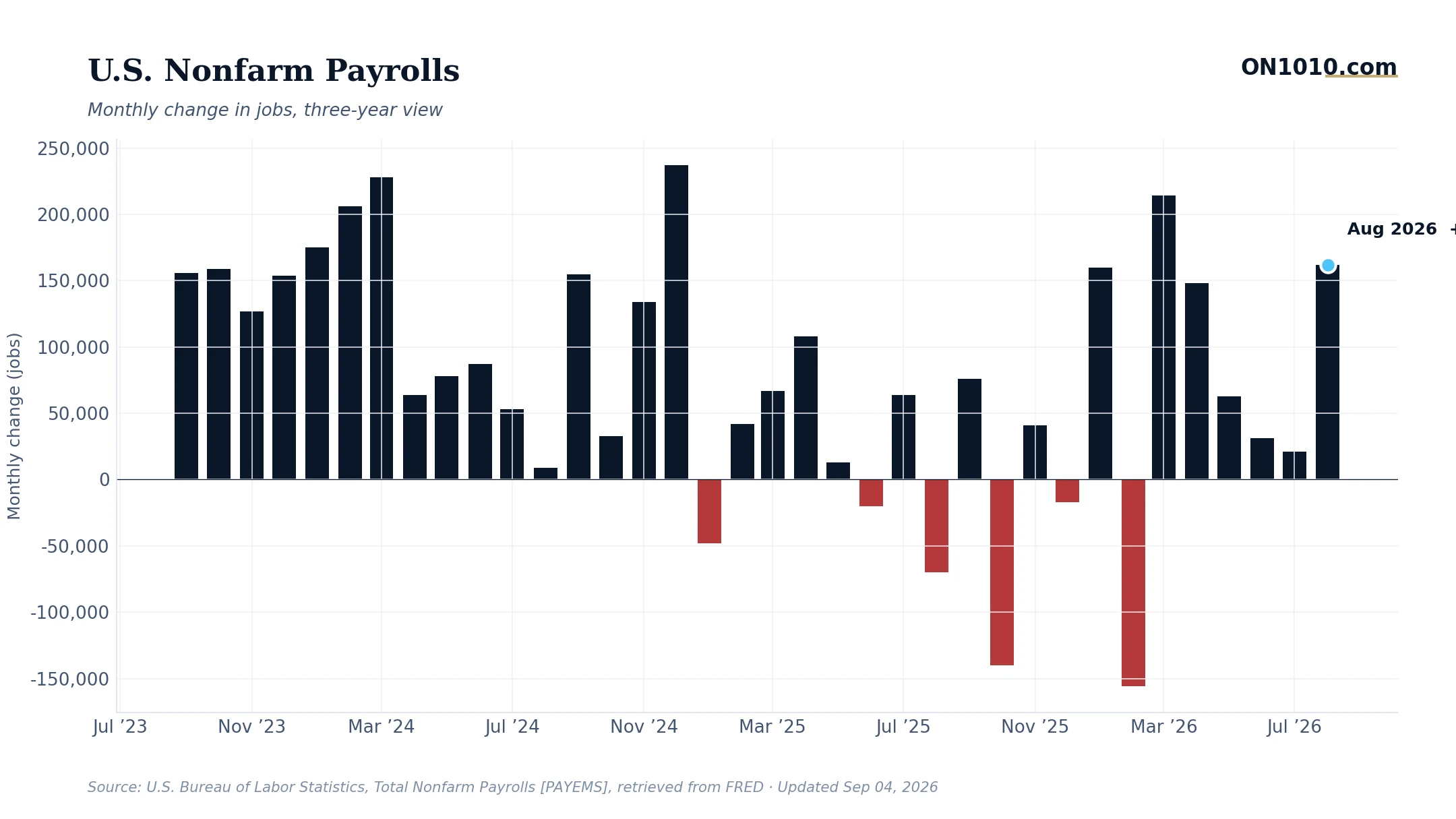
The U.S. economy added 162,000 jobs in July, which is a decent number by historical standards. But the real story isn’t the monthly print. It’s the pattern underneath it. Over the past six months, payrolls have grown by a total of 425,000 jobs, which works out to roughly 71,000 per month. That’s the slowest sustained pace since the post-pandemic labor market normalization. The engine isn’t stalling. It’s downshifting.
Total employment now stands at 159.1 million workers, up 667,000 from a year ago. A 0.42% annual growth rate is historically low. For context, in the decade before COVID, nonfarm payrolls grew at roughly 1.5% per year. The labor market is still expanding, but the rate of expansion has decelerated meaningfully.
Here’s the tension worth sitting with: inflation is running very hot by historical standards, long-term interest rates are elevated, and yet credit spreads remain remarkably tight. The credit market is essentially saying “no distress here,” even as the rate environment is the kind that, historically, has preceded recessions about 19% of the time within a year. That’s not a prediction. It’s a base rate worth knowing.
In past cycles, when job growth decelerated to this pace while interest rates stayed elevated, business operators faced a particular choice about capital. Slower hiring tends to signal that firms are protecting margins rather than chasing growth, which can be healthy at this stage of a cycle if productivity is rising alongside it. The productivity data will tell us whether this deceleration is discipline or distress.
Consumer sentiment remains historically weak, which typically means households are spending more cautiously. That’s a headwind to the revenue side of corporate margins, and margins lead hiring decisions. What the next several months of payroll data show will be heavily shaped by whether productivity gains are giving companies enough cushion to maintain margins without layoffs.
Bottom Line: The labor market is softening at the edges but holding its shape. The question that matters now is whether slowing job growth reflects disciplined capital allocation by businesses seeing a harder environment ahead, or something more concerning taking root beneath the surface.
Source: Federal Reserve Economic Data (FRED)
ON1010 Research is an independent publisher of economic education and is not a registered investment adviser, broker-dealer, or investment company. This content is for educational and informational purposes only and is not investment advice or a recommendation to buy, sell, or hold any security. Published under the publisher exemption recognized by Section 202(a)(11)(D) of the Investment Advisers Act of 1940 (Lowe v. SEC). Always consult a qualified financial professional before making any financial decision.
Free Research
The economy moves fast. We make sure you move faster.
Economic data, policy shifts, and market signals — delivered to your inbox.
Subscribe Free