
The Labor Market’s Quiet Signal: Still Holding, But the Backdrop Is Shifting
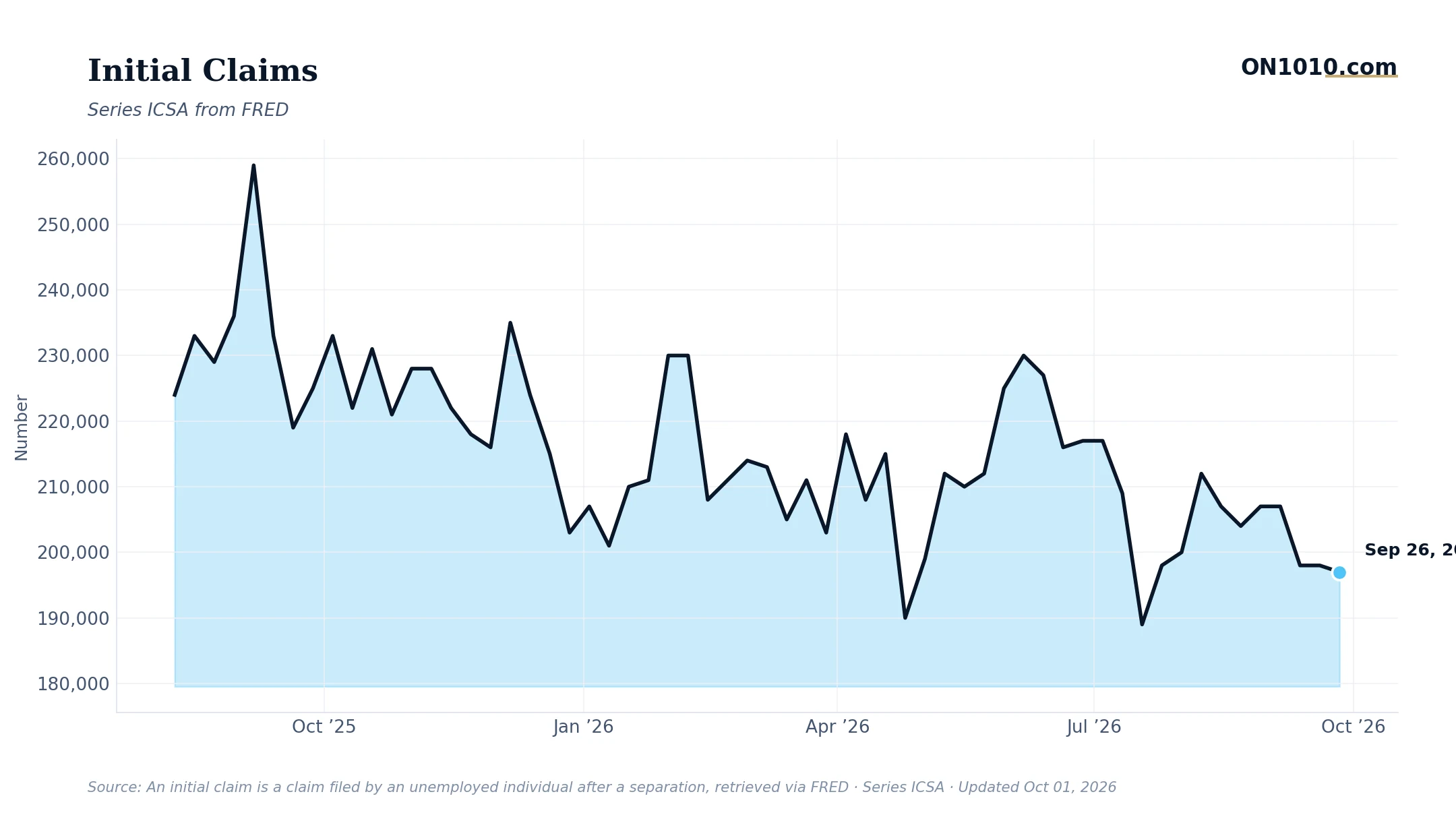
Initial jobless claims fell to 197,000 for the week ending September 26, down from 198,000 the week before. That is not the interesting part. The interesting part is the three-week streak under 200,000 after spending most of August above 204,000, suggesting a genuine firming, not just a one-week blip.
The Bigger Picture
Claims at this level sit well below the 250,000-to-300,000 range that historically signals a labor market under real stress. Firms simply are not cutting. But “not cutting” and “growing” are different things, and that distinction matters in the current setup. Monetary policy is running restrictive relative to its own history, long-term rates are elevated, and consumer sentiment is near the bottom of its historical range, all of which typically squeeze business margins over time. The labor market is the last domino to fall in that chain, and right now it is still standing.
Why It Matters
Historically, sustained claims readings under 200,000 have coincided with tight labor markets where companies hold onto workers even as hiring slows. Business operators and capital allocators have watched this series as an early warning system precisely because layoffs lead recessions, rate hikes, weak sentiment, and credit tightening rarely cause a downturn until companies actually start cutting headcount. The question this reading raises: is the resilience in claims a sign the economy is absorbing the pressure, or is it simply that the pressure has not yet forced a decision? The monetary policy gauge has shifted from neutral to restrictive in recent months, and historically, similar policy environments have preceded recessions within a year about 18% of the time. That is a minority outcome, but it is not a rounding error worth ignoring.
Bottom Line: The labor market is telling a calmer story than the macro backdrop suggests it should, which means either the economy is more resilient than the headlines imply, or the stress is building somewhere that claims data does not yet see.
Source: Federal Reserve Economic Data (FRED)
ON1010 Research is an independent publisher of economic education and is not a registered investment adviser, broker-dealer, or investment company. This content is for educational and informational purposes only and is not investment advice or a recommendation to buy, sell, or hold any security. Published under the publisher exemption recognized by Section 202(a)(11)(D) of the Investment Advisers Act of 1940 (Lowe v. SEC). Always consult a qualified financial professional before making any financial decision.
Free Research
The economy moves fast. We make sure you move faster.
Economic data, policy shifts, and market signals — delivered to your inbox.
Subscribe Free