
The Lock-In Effect Just Got Worse
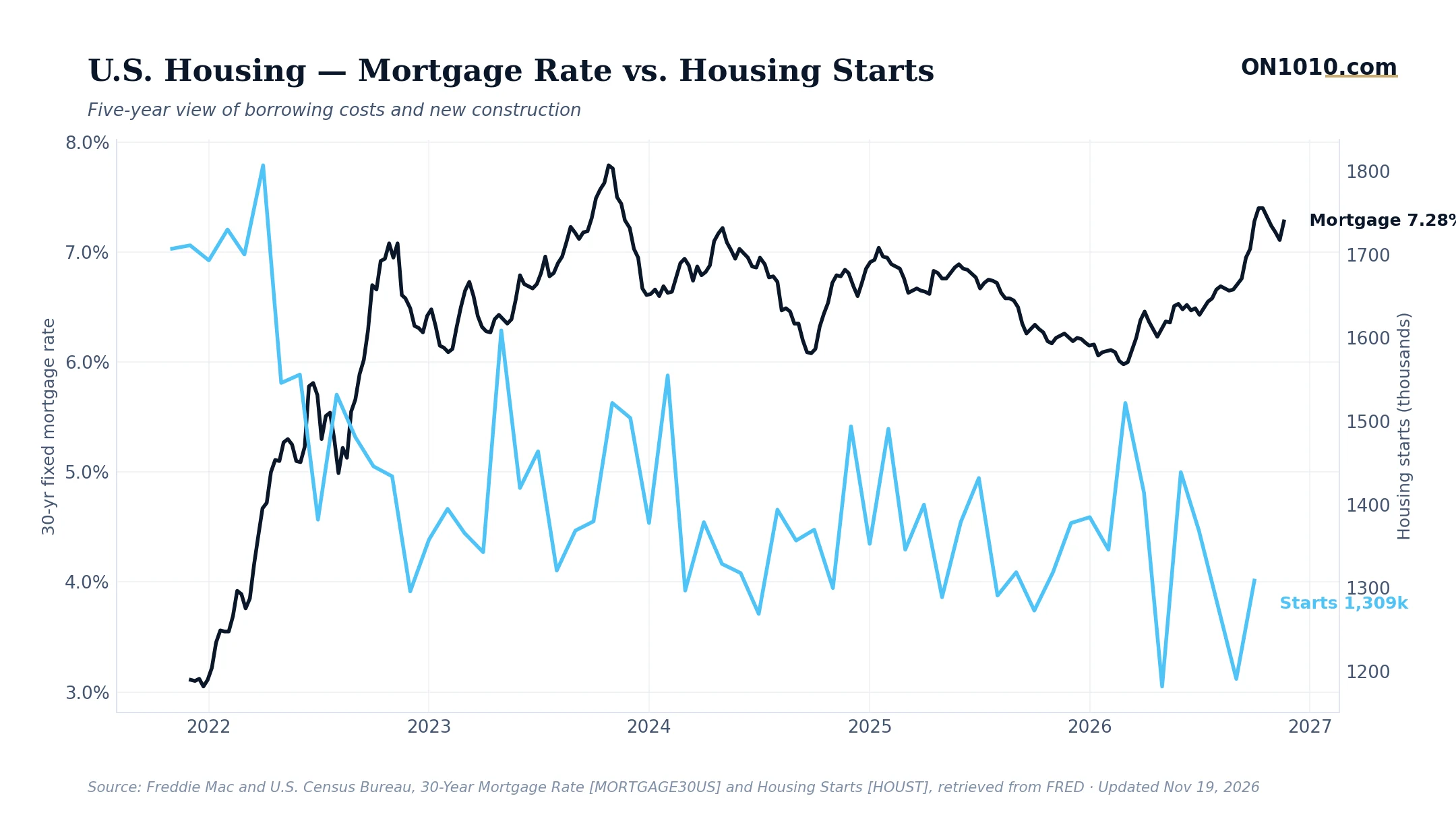
The 30-year mortgage rate jumped to 7.28% this week, up from 7.11% just seven days ago. That is the wrong direction for a housing market that was already frozen by affordability.
The bigger story is what this rate level does to supply. Roughly two-thirds of existing homeowners have mortgages locked in below 4%. At 7.28%, selling your home means trading a 3.5% rate for one that is more than double. So they don’t sell. Inventory stays thin. New buyers face high prices AND high rates simultaneously. This is the “lock-in effect,” and each time rates tick higher, it tightens the vise another turn.
The backdrop makes this harder to dismiss as a temporary blip. Inflation is running near the top of its historical range, monetary policy is still restrictive, and credit spreads are wide and rising. Those three things together suggest mortgage rates have no structural reason to fall quickly. The housing market is not just waiting for a Fed pivot; it is waiting for a realignment of the entire rate environment.
Historically, when long-term rates have held in this range alongside tight credit conditions, housing activity has stayed depressed for extended periods, pulling construction employment, appliance sales, and moving-related spending down with it. For business operators, the question is how much of their revenue depends on household formation and home-related spending, because that pipeline looks slow. For capital allocators, in past cycles, mortgage rate environments like this one have compressed homebuilder margins and weighed on consumer discretionary categories tied to new households.
Bottom Line: Rates nudged lower through October, and it looked like the worst might be behind housing. This week’s move back toward 7.3% is a reminder that the relief rally in affordability is fragile. The question now is whether this is a head fake before rates resume their drift lower, or the beginning of another leg higher that keeps the housing market in deep freeze through 2027.
Source: Federal Reserve Economic Data (FRED)
ON1010 Research is an independent publisher of economic education and is not a registered investment adviser, broker-dealer, or investment company. This content is for educational and informational purposes only and is not investment advice or a recommendation to buy, sell, or hold any security. Published under the publisher exemption recognized by Section 202(a)(11)(D) of the Investment Advisers Act of 1940 (Lowe v. SEC). Always consult a qualified financial professional before making any financial decision.
Free Research
The economy moves fast. We make sure you move faster.
Economic data, policy shifts, and market signals — delivered to your inbox.
Subscribe Free