
The Market Just Sent a Warning. Here’s How to Read It.
The Hook
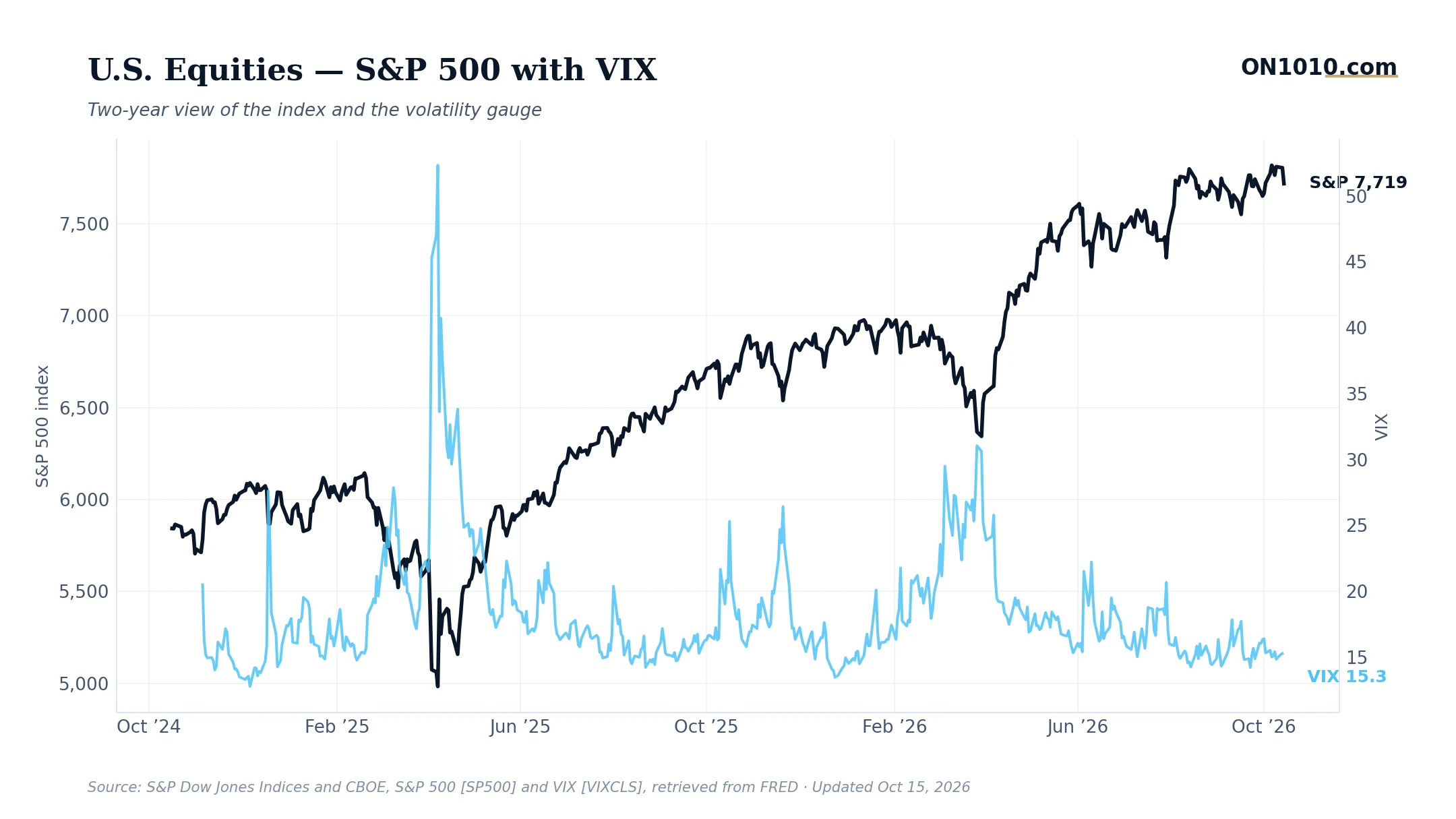
Wednesday’s session hit risk assets hard. The Nasdaq dropped 1.88%, the Russell 2000 fell 1.93%, and the VIX jumped 3.56% to 17.47, up sharply from 15.19 just two days prior. What most people will miss: this selloff happened while oil was falling and the dollar was weakening, two things that normally act as cushions for equities. When stocks drop and the usual hedges don’t explain it, the bond market is usually doing the talking.
What Moved
The 10-year Treasury yield is sitting at 5.21%, while the 2-year sits at 4.79%, leaving a spread of just 37 basis points between short and long rates. Gold climbed 1.68% to $4,176.80, a classic flight toward stores of value. Oil slipped to $93.63 a barrel, down 1.54%, even as a container ship sank in the Strait of Hormuz. Credit conditions have shifted from neutral to elevated stress. Market participation is deteriorating.
On Deck Today
Retail sales and weekly jobless claims both print Thursday morning. Retail sales will tell us whether consumers are actually pulling back or just feeling bad about things, a gap that has mattered a lot lately.
Why It Matters
Long-term rates in the upper range of their historical experience have historically preceded softer economic conditions. The combination of rising credit spreads, falling market participation, and a 5.21% 10-year yield is the kind of backdrop worth watching carefully, not panicking over.
The deeper read on what rising long-term rates mean for the cycle is exactly what The Long View is building toward Sunday. It’s free, and this week it’s worth your time.
ON1010 Research is an independent publisher of economic education and is not a registered investment adviser, broker-dealer, or investment company. This content is for educational and informational purposes only and is not investment advice or a recommendation to buy, sell, or hold any security. Published under the publisher exemption recognized by Section 202(a)(11)(D) of the Investment Advisers Act of 1940 (Lowe v. SEC). Always consult a qualified financial professional before making any financial decision.
Free Research
The economy moves fast. We make sure you move faster.
Economic data, policy shifts, and market signals — delivered to your inbox.
Subscribe Free