
The Strait of Hormuz Has Seen This Before. The Macro Setup Is Different This Time.
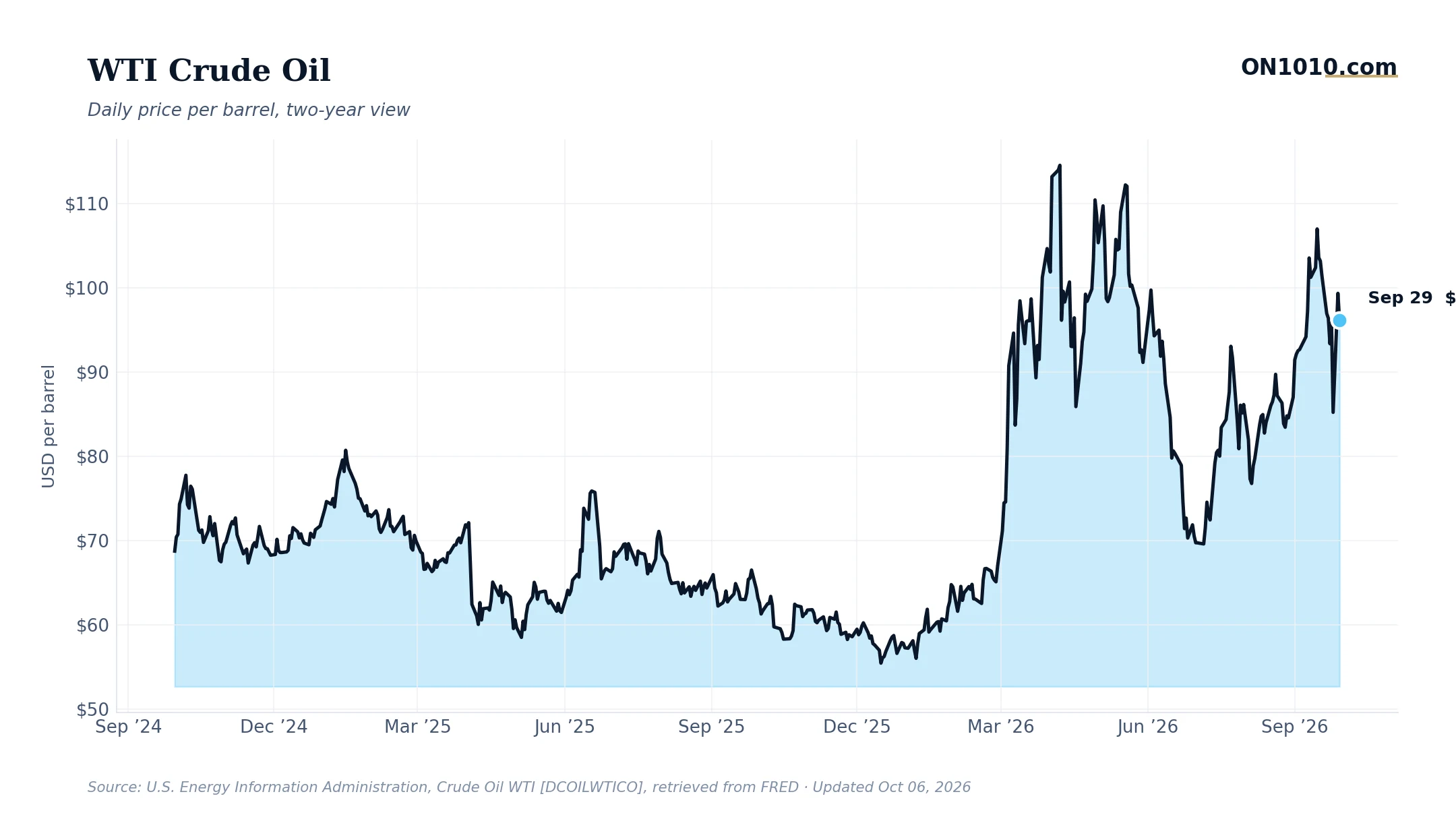
According to CNBC, nearly 20 commercial ships, mostly oil tankers, have come under attack in the Strait of Hormuz over the past month. The shipping lane handles roughly 20% of global oil supply, and it is now an active threat zone.
Here is what most coverage misses: the vulnerability runs in both directions. Oil exports were already rebounding through Hormuz after a prior disruption, which means insurance markets, shipping companies, and energy buyers had just started recalibrating risk downward. Stepped-up attacks reset that calculation. The cost premium for transiting the strait, embedded in shipping insurance, freight rates, and energy contracts, does not disappear when headlines fade. It compounds when the attacks keep coming.
The macro backdrop makes this more consequential than a typical headline risk. Inflation is running hot relative to history, and monetary policy is already restrictive. Energy is one of the few input costs that can move quickly and broadly enough to sustain price pressure across the entire goods and services economy simultaneously. A sustained disruption to Hormuz supply does not need to push oil to crisis levels to matter. Even a modest, persistent premium in energy prices lands on an economy where the Fed has limited room to look past supply-side inflation without losing credibility.
Historically, when energy supply shocks arrived alongside already-restrictive monetary policy, investors paid close attention to the sequence: energy shock first, core inflation response second, central bank reaction third. The lag between each step is where the uncertainty lives. The question worth tracking here is whether an escalation in Hormuz attacks proves durable enough to show up in the next few months of energy price data, or whether it stays contained as a regional friction.
Bottom Line: A Hormuz supply disruption is never just an oil story. When it lands on top of hot inflation and tight monetary policy, the chain of consequences runs longer and the Fed has fewer good options.
Read more: CNBC Top News
ON1010 Research is an independent publisher of economic education and is not a registered investment adviser, broker-dealer, or investment company. This content is for educational and informational purposes only and is not investment advice or a recommendation to buy, sell, or hold any security. Published under the publisher exemption recognized by Section 202(a)(11)(D) of the Investment Advisers Act of 1940 (Lowe v. SEC). Always consult a qualified financial professional before making any financial decision.
Free Research
The economy moves fast. We make sure you move faster.
Economic data, policy shifts, and market signals — delivered to your inbox.
Subscribe Free