
The Strait of Hormuz Is Not Just a Shipping Lane, It’s a Pressure Valve for the Global Economy
According to CNBC, oil prices rose Wednesday after Houthi attacks on Saudi Arabia intensified alongside Iranian-backed escalation targeting tankers transiting the Strait of Hormuz. The supply recovery narrative that had been calming energy markets is now competing with a geopolitical threat that sits on one of the world’s most irreplaceable economic chokepoints.
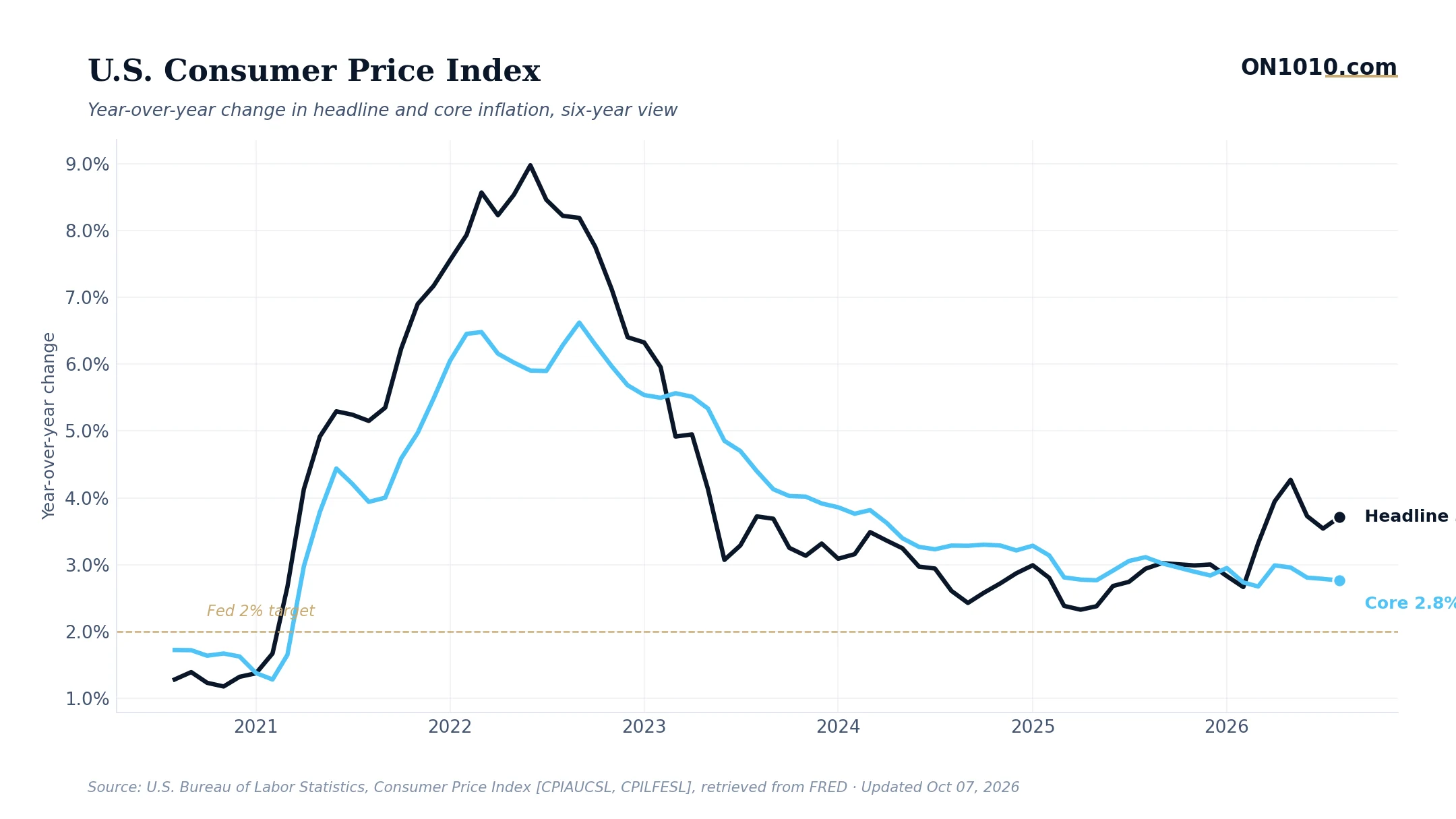
About 20% of the world’s seaborne oil passes through the Strait of Hormuz. There is no meaningful alternative route for most of that volume. When a chokepoint like this comes under sustained pressure, it does not just affect oil prices in isolation. Energy is an input cost for almost everything, manufacturing, shipping, agriculture, chemicals, plastics. When input costs rise, corporate margins come under pressure, and compressed margins eventually slow hiring and investment. That is the transmission mechanism worth watching, and it matters especially now: inflation is already running in the upper range of its historical history, and monetary policy is already restrictive. An energy shock landing on top of that backdrop does not have much cushion to absorb it.
The economy is also sending some mixed signals here. Consumer sentiment is near its historical floor, which has rarely preceded a recession in the data but does suggest households are already strained. Long-term interest rates are historically elevated, tightening financial conditions for businesses that need to borrow. An oil spike would add friction to an economy that is not exactly running with slack.
Historically, investors and business operators have treated sustained Hormuz disruptions differently from brief spikes. A temporary shock gets priced in and fades. A structural shift in shipping risk, one that rewrites insurance premiums, forces rerouting, or triggers strategic reserve releases, tends to embed itself in input costs for quarters, not weeks. The question this raises is whether the current escalation is episodic or the beginning of a more persistent repricing of energy risk. The answer matters enormously for anyone with exposure to energy-intensive margins.
Bottom Line: The Strait of Hormuz is where geopolitical risk becomes economic reality fastest. With inflation already elevated and monetary policy already tight, an energy shock here has less room to be shrugged off than it would in a more forgiving macro environment.
Read more: CNBC Top News
ON1010 Research is an independent publisher of economic education and is not a registered investment adviser, broker-dealer, or investment company. This content is for educational and informational purposes only and is not investment advice or a recommendation to buy, sell, or hold any security. Published under the publisher exemption recognized by Section 202(a)(11)(D) of the Investment Advisers Act of 1940 (Lowe v. SEC). Always consult a qualified financial professional before making any financial decision.
Free Research
The economy moves fast. We make sure you move faster.
Economic data, policy shifts, and market signals — delivered to your inbox.
Subscribe Free