
The Treasury Just Tripled Its Buyback of Long-Term Debt. That’s Worth Understanding.
According to CNBC, the Treasury Department is buying back up to $6 billion in longer-term debt, three times the normal pace. The headline sounds technical. The implications are not.
Treasury buybacks are essentially the government repurchasing its own older bonds from the market, replacing them with freshly issued debt, usually at shorter maturities. When the buyback target triples, it signals active management of the maturity profile of U.S. debt. The question worth sitting with: why now, and what does it tell us about where the Treasury sees risk?
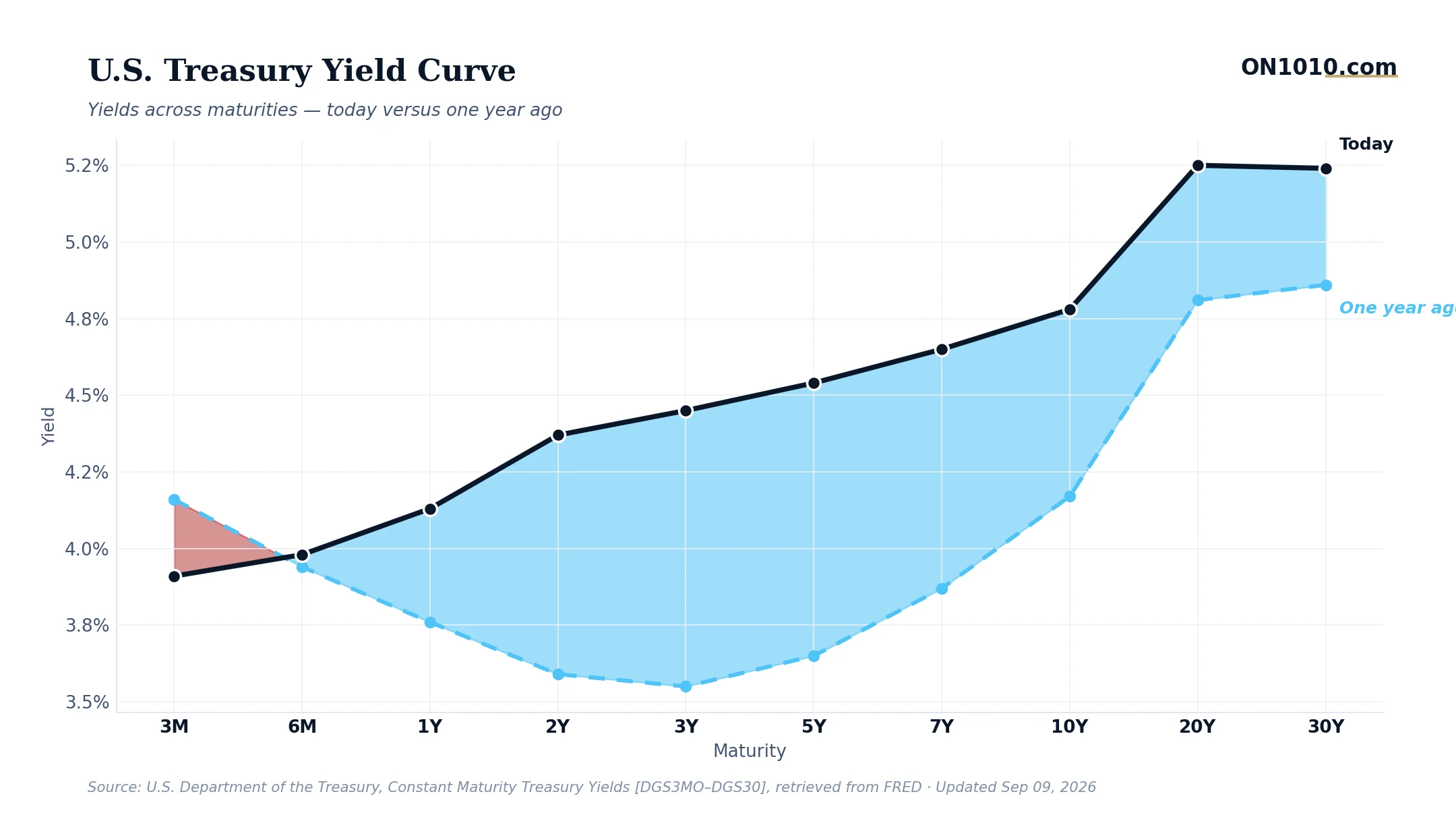
Long-term rates are sitting in the upper quarter of their historical range. That means any new long-term debt the government issues costs more to service. By buying back existing long-term paper and rolling into shorter-duration issuance, the Treasury can reduce near-term interest expense. But that trade-off has a cost: it concentrates refinancing risk at shorter maturities, meaning the government needs to roll that debt over more frequently, exposing the federal balance sheet to wherever rates land in the future. This is the duration tradeoff that every CFO and portfolio manager knows well, applied at sovereign scale.
There’s a second layer here. Larger buybacks inject liquidity into the long end of the bond market, which can put downward pressure on long-term yields. With inflation still running hot relative to its own history, the bond market has been demanding extra compensation to hold long duration. A $6 billion buyback is a nudge, not a revolution, but it shows the Treasury is paying attention to that demand. Historically, when governments actively reshape the maturity profile of their debt during high-rate environments, it signals that debt management has become as important a policy variable as the deficit itself.
Bottom Line: Tripling the buyback pace is the Treasury quietly acknowledging that long-term rates are a real fiscal cost, and managing duration is now part of the job. The bond market will notice.
Read more: CNBC Top News
ON1010 Research is an independent publisher of economic education and is not a registered investment adviser, broker-dealer, or investment company. This content is for educational and informational purposes only and is not investment advice or a recommendation to buy, sell, or hold any security. Published under the publisher exemption recognized by Section 202(a)(11)(D) of the Investment Advisers Act of 1940 (Lowe v. SEC). Always consult a qualified financial professional before making any financial decision.
Free Research
The economy moves fast. We make sure you move faster.
Economic data, policy shifts, and market signals — delivered to your inbox.
Subscribe Free