
The Yield Curve Just Un-Inverted. Now Comes the Tricky Part.
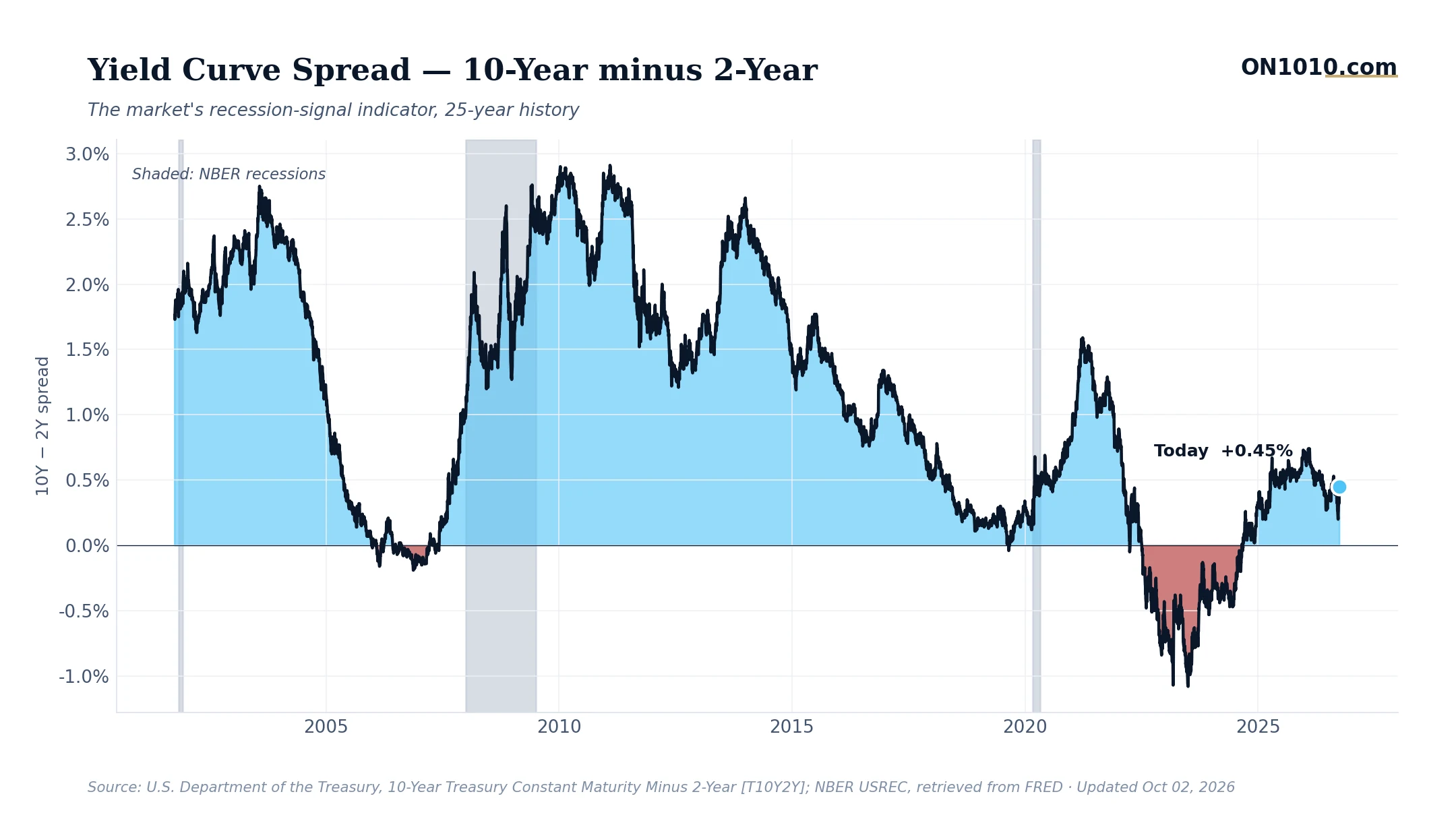
The 10-year/2-year Treasury spread sits at 0.45% as of October 2, a full 13 basis points wider than just a week ago. The curve is positive and steepening. For investors who spent years watching this spread plunge deep into negative territory, that sounds like good news. The history here, though, deserves a closer look.
The yield curve inverted in mid-2022 and stayed that way for over two years, generating constant recession warnings. The un-inversion, which is now firmly in place, ends that particular alarm. But the steepening process itself has a mixed historical record. In past cycles, the curve has often re-steepened in one of two ways: long-term rates fall because the Fed cuts aggressively into a recession, or short-term rates fall as the market prices in easier policy while growth holds up. The first scenario has historically been followed by economic pain. The second has historically been more benign. Right now, with monetary policy still restrictive by historical standards and long-term rates elevated, the market is doing the work of adjudicating between those two stories every day.
The broader dashboard adds some texture. Growth is near its historical midpoint, inflation is still running hot by historical standards, and consumer sentiment remains near cycle lows, even as it ticks higher. Monetary policy is restrictive. That combination creates friction for businesses that need to finance growth or refinance existing debt.
Historically, when the curve re-steepens from deep inversion, investors and business operators have paid close attention to whether short rates or long rates are doing the moving, because the driver tells you which scenario is unfolding. A spread that widens because long rates rise (as appears to be happening here) carries different implications than one that widens because short rates collapse.
Bottom Line: The curve is no longer flashing the inversion warning, but a steepening curve in an environment of high long-term rates and restrictive monetary policy raises its own questions. Which scenario is this: growth holding up, or the bond market beginning to price in something harder ahead?
Source: Federal Reserve Economic Data (FRED)
ON1010 Research is an independent publisher of economic education and is not a registered investment adviser, broker-dealer, or investment company. This content is for educational and informational purposes only and is not investment advice or a recommendation to buy, sell, or hold any security. Published under the publisher exemption recognized by Section 202(a)(11)(D) of the Investment Advisers Act of 1940 (Lowe v. SEC). Always consult a qualified financial professional before making any financial decision.
Free Research
The economy moves fast. We make sure you move faster.
Economic data, policy shifts, and market signals — delivered to your inbox.
Subscribe Free