
The Yield Curve Keeps Flattening. Here’s What the Bond Market Is Quietly Signaling.
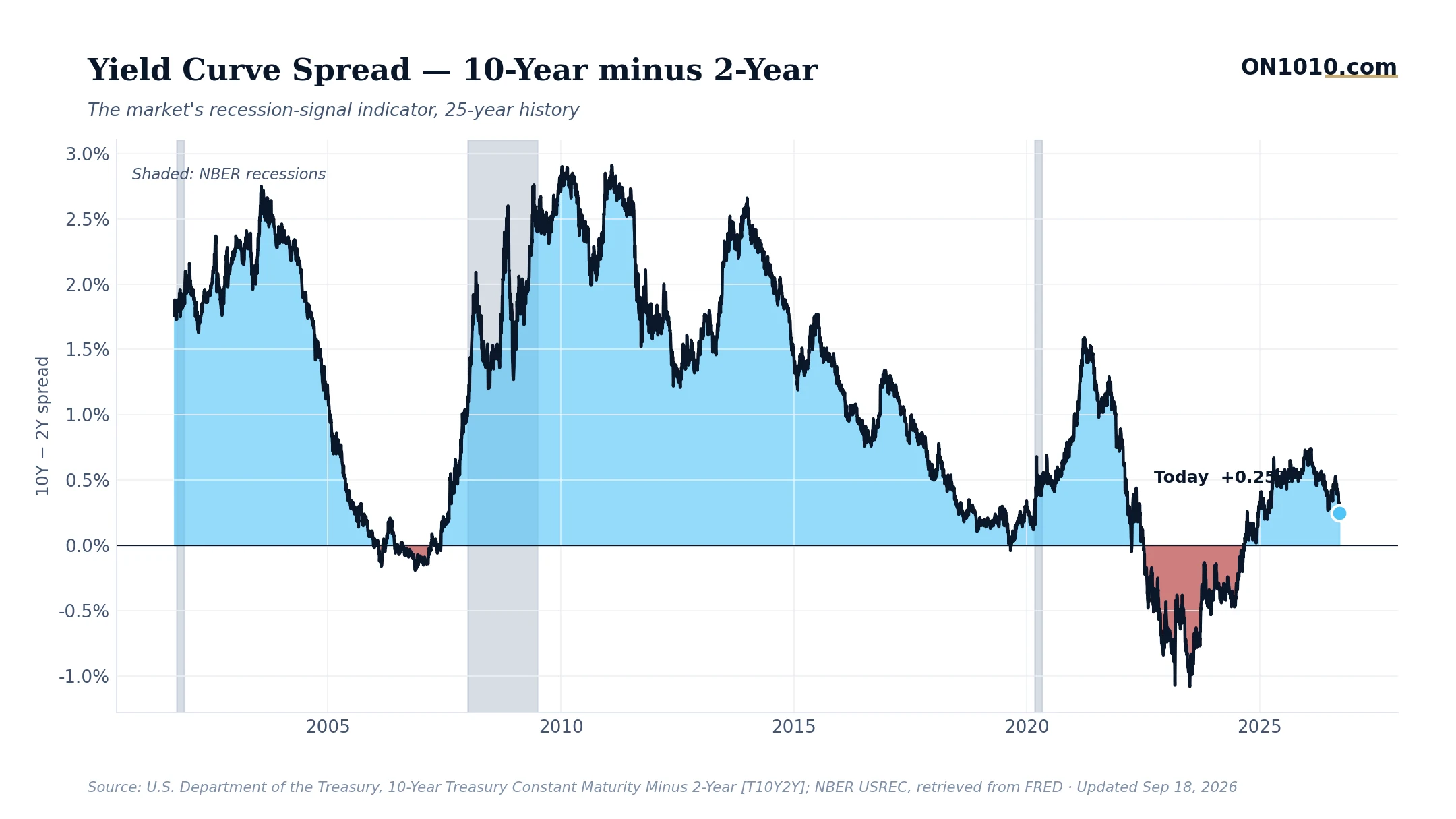
The gap between 10-year and 2-year Treasury yields narrowed to 0.25% on September 18, down from 0.33% just one week ago. That’s a 24% compression in seven trading days. The curve hasn’t inverted, but it’s moving in a direction worth paying attention to.
The Bigger Picture
A positively sloped yield curve is the normal state of affairs. Longer-term bonds carry more risk, so investors usually demand higher rates to hold them. When that gap shrinks, it typically means bond investors are growing more cautious about the outlook further out, or they believe the Fed will eventually have to cut short-term rates. Right now, that flattening is happening against a backdrop that makes it more complicated to read: inflation is still historically hot, long-term interest rates remain in the upper quarter of their historical range, and credit spreads are unusually tight, suggesting corporate bond markets aren’t yet pricing in meaningful stress.
Those signals don’t all point the same direction. Bond investors appear to be hedging a softer growth outlook while credit markets remain calm. When those two markets disagree, the tension is worth watching.
Why It Matters
Historically, yield curve flattening has preceded recessions, but the relationship is noisy and timing is unreliable. The curve spent months inverted before the 2008 recession and also inverted in the early 1990s without producing the deep downturn many feared. In past cycles, businesses watching the curve have used it as a prompt to review financing plans, particularly for longer-duration capital commitments, since borrowing conditions can shift quickly once the curve makes a decisive move. The more relevant question here may be direction: the spread has moved from 0.33% to 0.25% in a week, and trend momentum in fixed income often carries further than the initial move suggests.
For context, historically when long-term rates sit in the upper quarter of their range as they do today, a recession has followed within 12 months about 19% of the time. That’s a minority outcome, not a base case, but worth knowing.
Bottom Line: The bond market is quietly tightening the screws on the growth narrative while equity markets hum along with normal volatility. If the curve continues flattening toward zero, the question businesses and capital allocators will face is whether that’s the market pricing in Fed cuts or pricing in trouble.
Source: Federal Reserve Economic Data (FRED)
ON1010 Research is an independent publisher of economic education and is not a registered investment adviser, broker-dealer, or investment company. This content is for educational and informational purposes only and is not investment advice or a recommendation to buy, sell, or hold any security. Published under the publisher exemption recognized by Section 202(a)(11)(D) of the Investment Advisers Act of 1940 (Lowe v. SEC). Always consult a qualified financial professional before making any financial decision.
Free Research
The economy moves fast. We make sure you move faster.
Economic data, policy shifts, and market signals — delivered to your inbox.
Subscribe Free