
Wages Are Rising. But Are Workers Actually Getting Ahead?
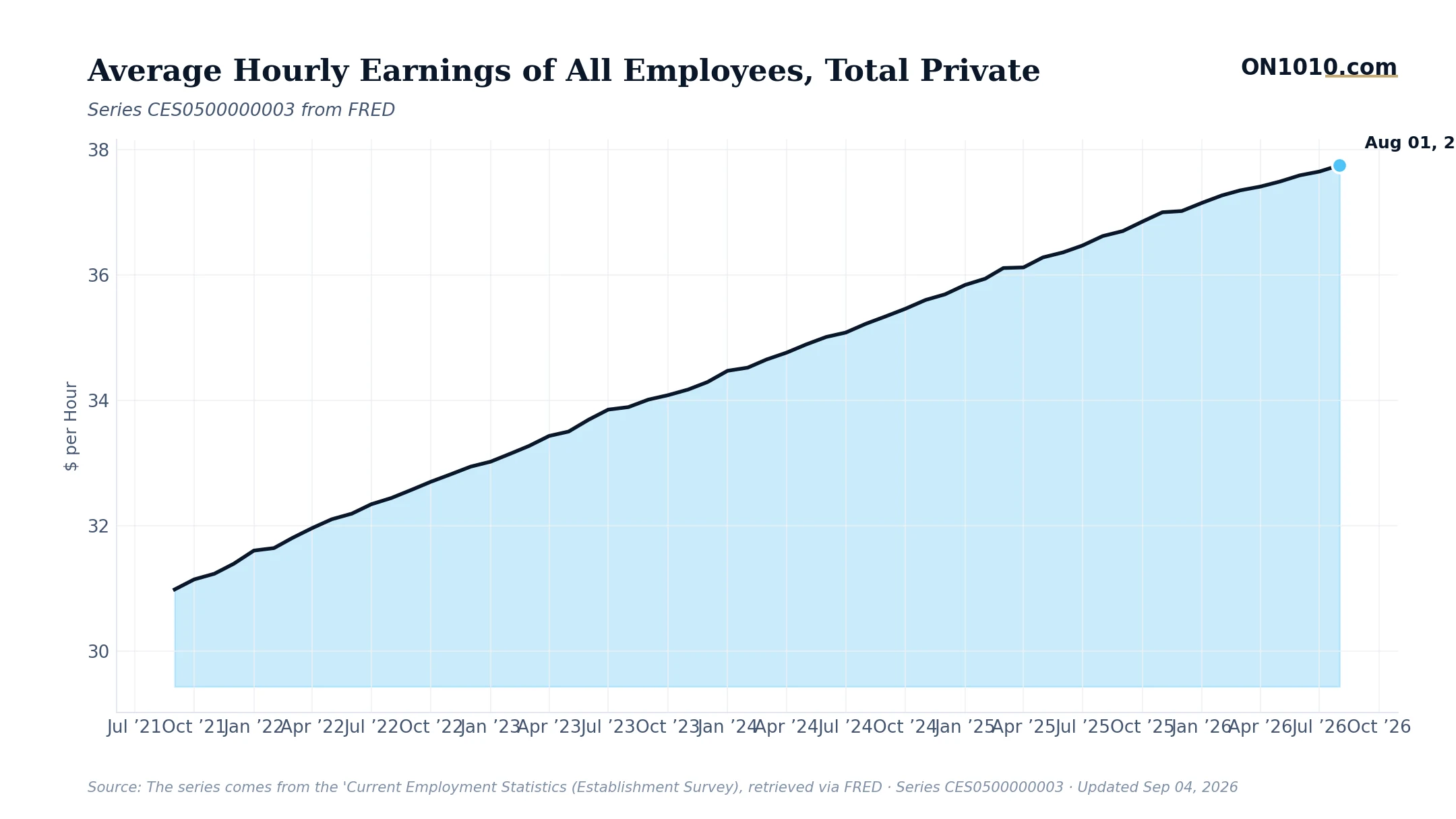
Average hourly earnings hit $37.75 in August, up 0.27% from July and 2.44% over the past year. On the surface, that sounds like progress. The puzzle is what happens when you run those numbers against inflation.
Core inflation is running historically hot right now, sitting higher than roughly nine of every ten months on record. If prices are rising faster than that 2.44% wage gain, workers aren’t gaining ground in real terms. They’re losing it, just slowly enough that the headline number looks fine.
Look at the six-month trend and the story gets more interesting. From March through August, hourly earnings climbed from $37.35 to $37.75, a steady, unspectacular grind higher. No acceleration, no stall. That kind of gradual, controlled wage growth is actually what the Fed wants to see. Explosive wage gains feed into prices; flat wages signal a labor market seizing up. This middle path keeps unit labor costs from blowing out, which helps protect corporate margins, which matters for whether businesses keep hiring and investing.
The bigger tension right now is that consumer sentiment is historically weak, even as credit spreads are tight and market volatility is low. That combination is unusual. Workers may be earning more on paper but feeling worse about their financial position, possibly because the cumulative price increases of the past few years have permanently shifted their sense of what a dollar buys. Historically, when nominal wage growth runs below inflation for an extended stretch, consumer spending on discretionary goods tends to soften, even when the employment picture looks clean.
In past cycles, business operators have used real wage trends as a signal for pricing power: if workers’ real incomes are under pressure, passing through further price increases gets harder without losing volume.
Bottom Line: The wage number itself is orderly. The real question is whether 2.44% nominal growth is actually keeping pace with what workers are paying at the register, and what happens to consumer spending if the gap keeps running against them.
Source: Federal Reserve Economic Data (FRED)
ON1010 Research is an independent publisher of economic education and is not a registered investment adviser, broker-dealer, or investment company. This content is for educational and informational purposes only and is not investment advice or a recommendation to buy, sell, or hold any security. Published under the publisher exemption recognized by Section 202(a)(11)(D) of the Investment Advisers Act of 1940 (Lowe v. SEC). Always consult a qualified financial professional before making any financial decision.
Free Research
The economy moves fast. We make sure you move faster.
Economic data, policy shifts, and market signals — delivered to your inbox.
Subscribe Free