
When a Courtroom Becomes a Trade Policy Variable
According to CNBC, a legal challenge has been filed in the U.S. Court of International Trade targeting the Trump administration’s latest round of global tariffs, which the White House justifies as a response to countries failing to ban trade in goods produced with forced labor. The legal angle here is the part most coverage will skip past, and it’s the part that matters most to anyone with supply chain exposure or import-dependent cost structures.
Tariffs are typically framed as a policy lever. A court challenge reframes them as a contingent liability. If the legal challenge succeeds, or even advances far enough to create injunctive uncertainty, businesses that have already repriced contracts, restructured sourcing, or passed costs through to customers face a sudden reversal of the very conditions they planned around. That’s the kind of whipsaw that compresses margins twice: once going in, once coming out.
The forced-labor justification is worth examining on its own terms. It’s a legally distinct rationale from the national security and trade-deficit arguments used in earlier tariff rounds, and courts have sometimes treated those differently. Whether this justification holds up in trade court is genuinely uncertain, and that uncertainty itself has an economic cost. Capital dislikes ambiguity. Businesses making long-horizon sourcing decisions, reshoring, supplier diversification, contract manufacturing, need stable policy assumptions to make the math work. A tariff regime under active litigation is harder to plan around than a settled one, even if the settled one is costly.
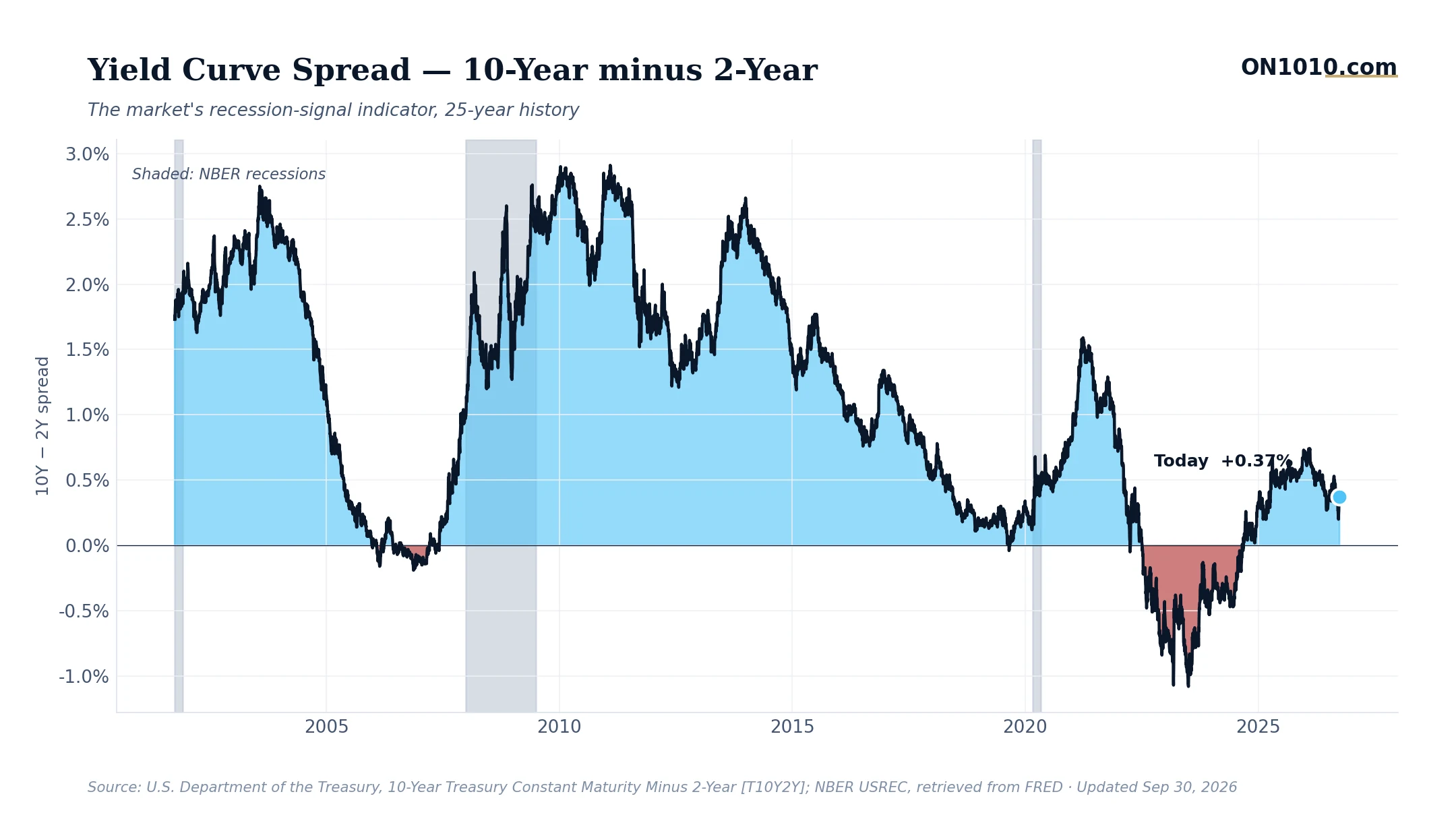
Zoom out and the backdrop is already complicated: core inflation sits well above its historical norm, long-term interest rates are elevated, and consumer sentiment is near historic lows. Adding legal uncertainty to trade costs at this juncture tightens the squeeze on business margins from multiple directions simultaneously. Historically, investors have watched trade litigation carefully as a signal of policy durability, because a tariff that gets struck down isn’t just a reprieve, it reshuffles competitive positioning across entire industries in ways that can take quarters to digest.
Bottom Line: The tariff story was already complex. Add a court challenge, and the real question for business operators becomes whether to make long-term capital commitments against a policy that might not survive its own legal foundation.
Read more: CNBC Top News
ON1010 Research is an independent publisher of economic education and is not a registered investment adviser, broker-dealer, or investment company. This content is for educational and informational purposes only and is not investment advice or a recommendation to buy, sell, or hold any security. Published under the publisher exemption recognized by Section 202(a)(11)(D) of the Investment Advisers Act of 1940 (Lowe v. SEC). Always consult a qualified financial professional before making any financial decision.
Free Research
The economy moves fast. We make sure you move faster.
Economic data, policy shifts, and market signals — delivered to your inbox.
Subscribe Free