
When a Regime Runs Low on Cash, the Risk Premium Goes Up
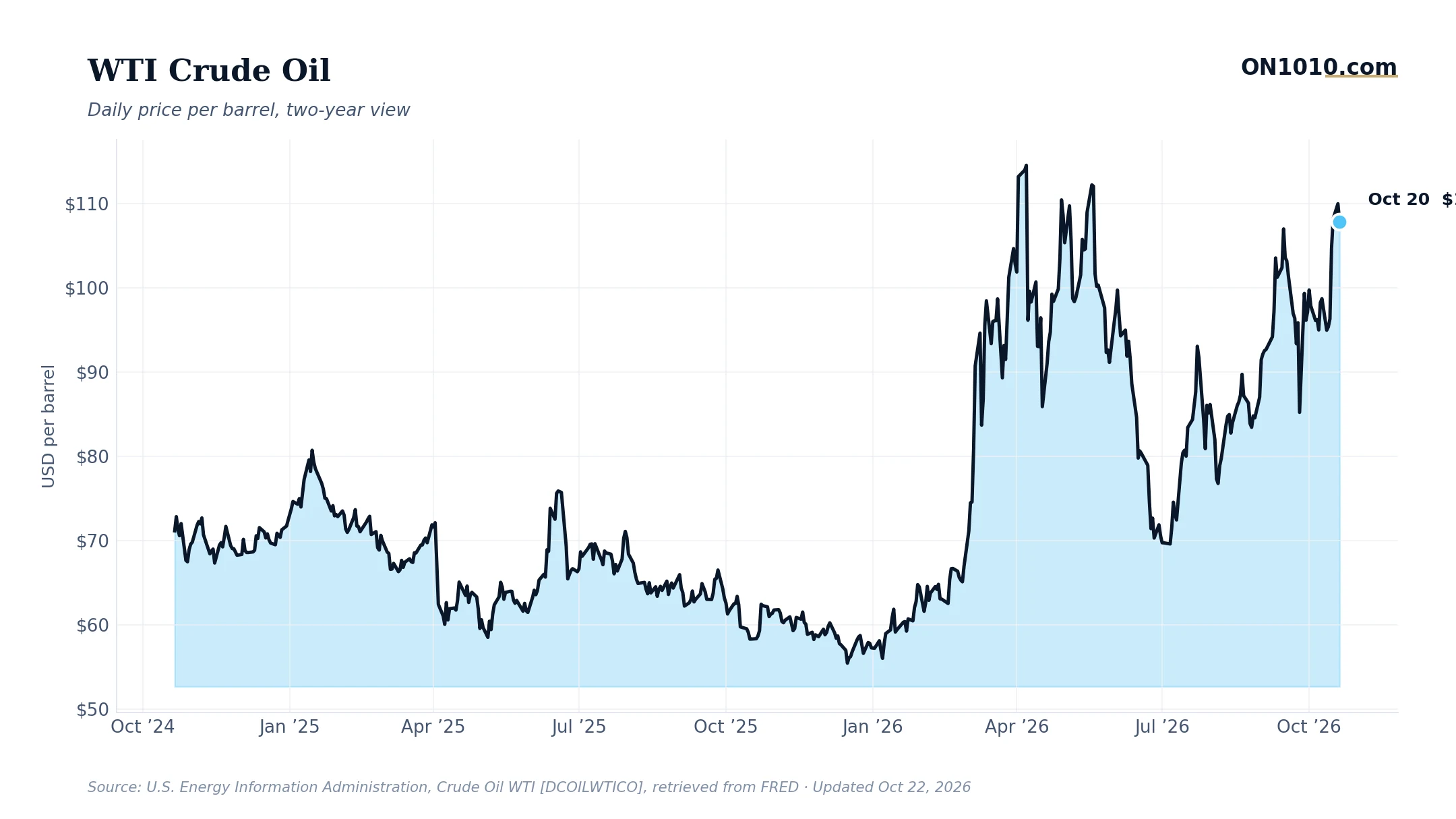
According to CNBC, oil prices are jumping again, and analysts are pointing toward Iran as a key reason why. The argument is straightforward and worth understanding: as sanctions and lower prices squeeze Iran’s oil revenues, a cash-strapped regime becomes a more unpredictable one.
The economic logic here is grimly consistent with how history works. Governments that depend on commodity exports to fund domestic stability face a brutal feedback loop when prices fall or export volumes are constrained. Less oil revenue means less money for subsidies, military, and political patronage. That internal pressure doesn’t make regimes more cautious. It tends to make them more willing to take risks externally, because the cost of inaction looks higher from the inside. The geopolitical risk premium baked into oil prices is, at its core, a reflection of this incentive structure.
What makes this moment worth watching is the broader backdrop. Credit spreads are wide and rising. Consumer sentiment is near historic lows. Monetary policy remains restrictive, with a real policy rate that sits above its long-run average. Into that already-stressed environment, an oil price spike carries more weight than it would in an economy with slack and low debt-service costs. Energy costs are pass-through inflation. They hit margins at the company level and purchasing power at the household level simultaneously. Historically, sustained energy price increases have shown up in core inflation data with a lag of three to six months, which matters when the Fed is already navigating inflation that sits well above its historical norm.
Historically, investors have looked at geopolitically driven oil spikes differently from demand-driven ones. The former tend to be shorter in duration but sharper in volatility, particularly for energy equities, which can move dramatically on price signals before the fundamentals of production and margin catch up. The question this raises is whether the current move reflects a durable shift in the risk environment or a shorter-term spike that fades as diplomatic dynamics shift. Past performance offers no reliable answer, and anyone making capital allocation decisions tied to this dynamic would do well to work through it with a qualified financial professional.
Bottom Line: A cash-poor Iran is a more dangerous Iran, and the oil market is starting to price that logic in, arriving at exactly the wrong moment for an economy already carrying high rates, wide credit spreads, and fragile consumer confidence.
Read more: CNBC Top News
ON1010 Research is an independent publisher of economic education and is not a registered investment adviser, broker-dealer, or investment company. This content is for educational and informational purposes only and is not investment advice or a recommendation to buy, sell, or hold any security. Published under the publisher exemption recognized by Section 202(a)(11)(D) of the Investment Advisers Act of 1940 (Lowe v. SEC). Always consult a qualified financial professional before making any financial decision.
Free Research
The economy moves fast. We make sure you move faster.
Economic data, policy shifts, and market signals — delivered to your inbox.
Subscribe Free