
When Oil Crosses $100, the Fed’s Job Gets Harder
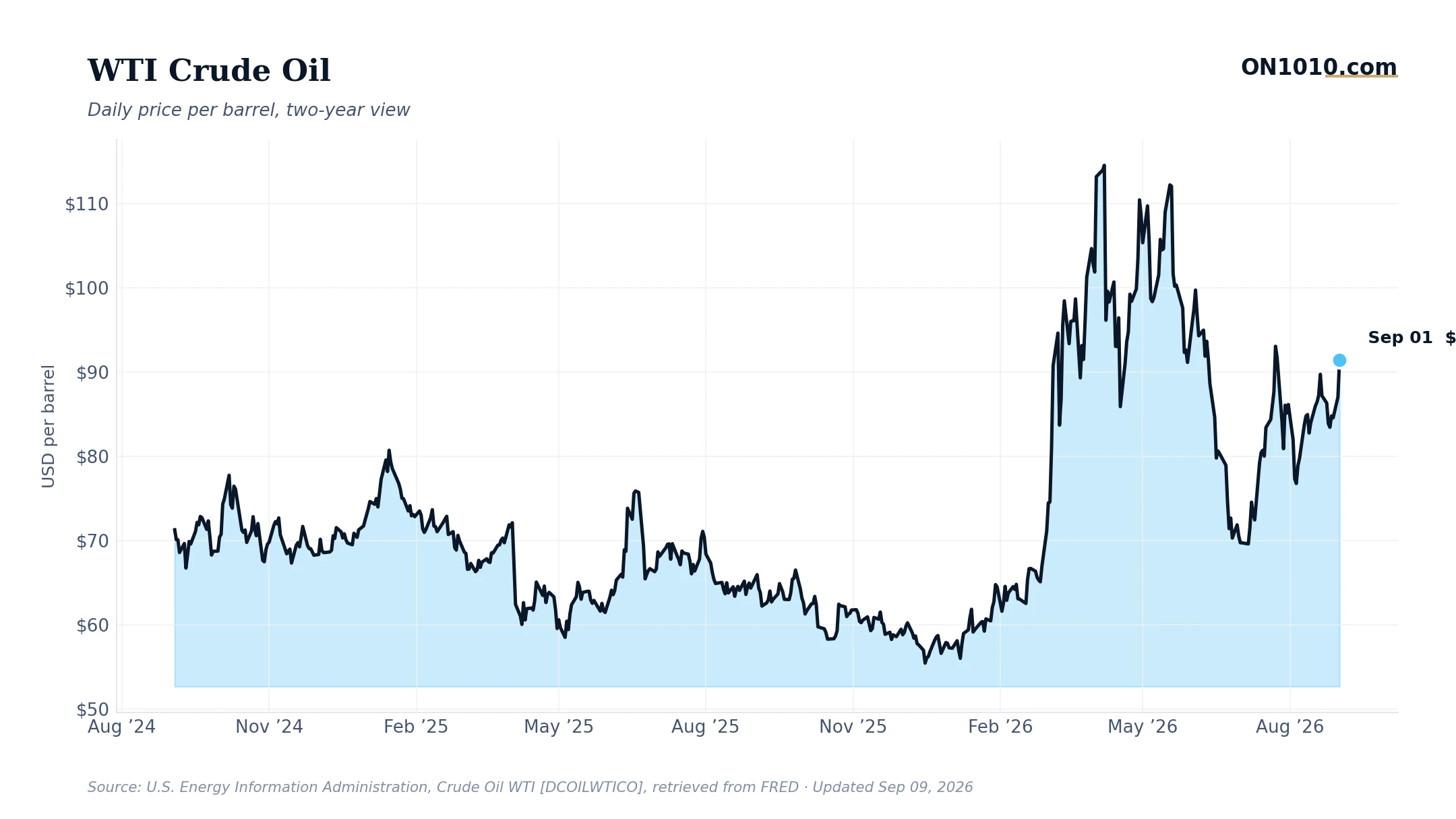
According to CNBC, the 2-year Treasury yield edged up 2 basis points Wednesday as crude oil climbed above $100 a barrel. Two basis points sounds like nothing. The implications are not nothing.
The 2-year Treasury is Wall Street’s best real-time read on where traders think the Fed is headed. When it rises alongside oil, the market is whispering something specific: this energy spike could keep inflation elevated long enough to delay rate cuts. That’s the tension worth unpacking.
Here’s the mechanism. Oil above $100 flows through almost every cost in the economy. Trucking, manufacturing, agriculture, plastics, air travel, energy is an input to nearly everything. When those input costs rise, companies face a choice: absorb the hit and watch margins compress, or pass costs to customers and rekindle inflation. Neither outcome is friendly for the soft-landing scenario the Fed has been working toward. Core inflation is already running historically hot by our gauges, sitting higher than roughly nine out of every ten months on record. A sustained oil spike doesn’t arrive into a vacuum. It arrives into an economy that’s already running warm.
Long-term rates are also sitting in the upper range of their historical experience, with the 10-year Treasury at 4.78% as of last week. That’s tighter financial conditions for businesses refinancing debt, for consumers carrying variable-rate loans, and for companies weighing capital investment. The credit market is calm, with spreads tight, meaning lenders aren’t panicking yet. But the combination of hot inflation and rising energy costs is precisely the kind of setup that has historically tested that calm.
Historically, investors have treated oil-driven inflation differently from demand-driven inflation, because it functions more like a tax than a sign of economic strength. The question worth sitting with: how long does $100 oil hold, and does it change the calculus for the Fed’s next move?
Bottom Line: Oil at $100 plus already-hot inflation is a pinch point the bond market is right to notice. The 2-year yield is the messenger. Watch what it does next.
Read more: CNBC Top News
ON1010 Research is an independent publisher of economic education and is not a registered investment adviser, broker-dealer, or investment company. This content is for educational and informational purposes only and is not investment advice or a recommendation to buy, sell, or hold any security. Published under the publisher exemption recognized by Section 202(a)(11)(D) of the Investment Advisers Act of 1940 (Lowe v. SEC). Always consult a qualified financial professional before making any financial decision.
Free Research
The economy moves fast. We make sure you move faster.
Economic data, policy shifts, and market signals — delivered to your inbox.
Subscribe Free