
When the 10-Year Hits 5.11%, History Has a Warning Worth Hearing
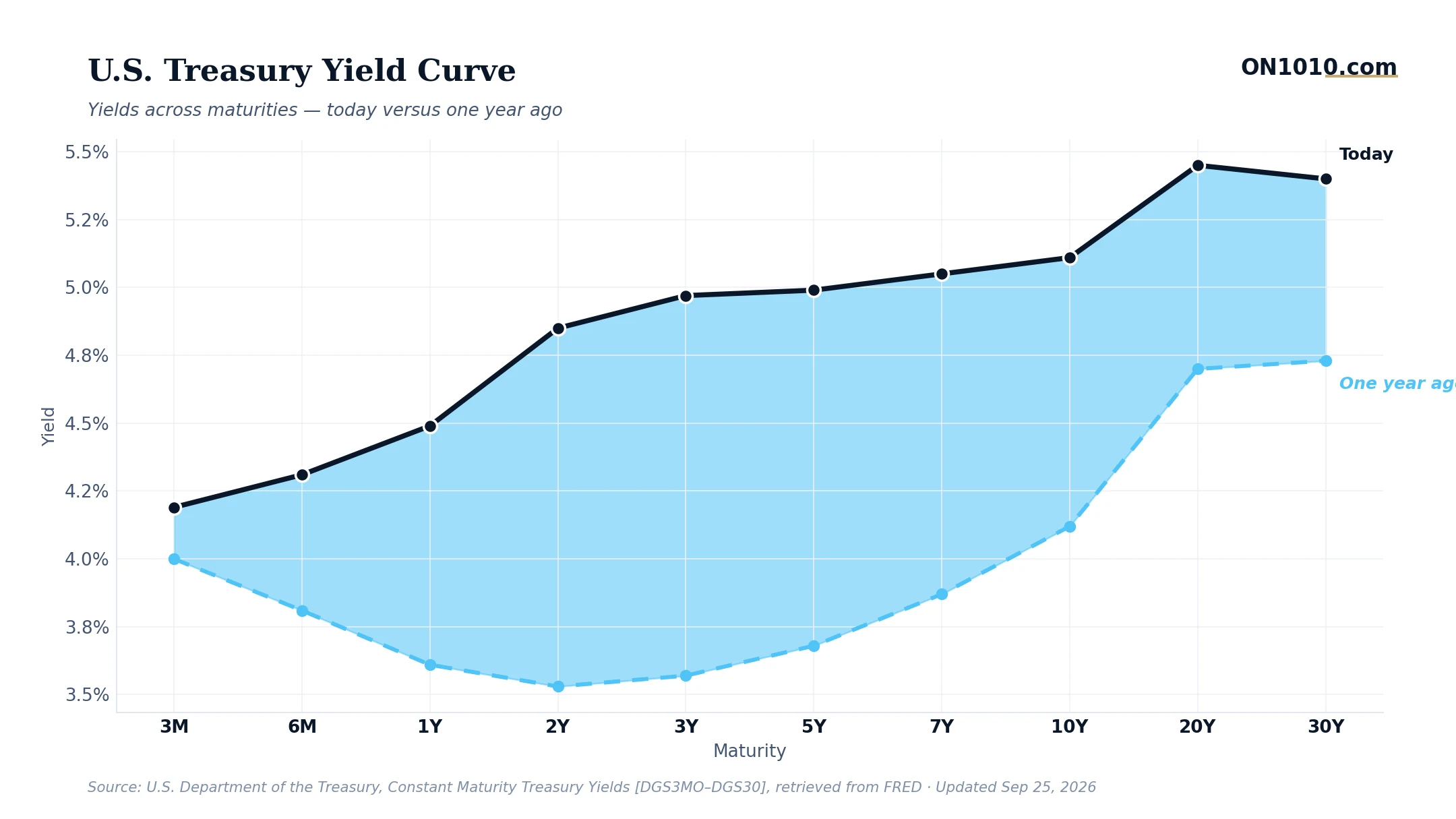
According to CNBC, the 10-year Treasury yield has spiked to 5.11%, a level not seen in years, and the historical record suggests rapid rate rises like this one tend to end with something breaking in the financial system.
The mechanism is straightforward, even if the timing is never predictable. When long-term rates rise sharply, they reprice every asset on earth simultaneously. Mortgages get more expensive. Corporate borrowing costs jump. Private equity deals that penciled out at 4% rates suddenly don’t work at 5%. The danger isn’t just the level, it’s the speed. Balance sheets built for one rate environment get stress-tested almost overnight, and the weakest links tend to show up in places nobody was watching. Think back to March 2023, when Silicon Valley Bank collapsed under the weight of a bond portfolio that looked fine until rates moved fast. That was a preview, not an anomaly.
The confusing part right now is the mixed signals. Credit spreads are historically tight, meaning corporate bond markets are calm and not yet pricing in meaningful default risk. The VIX sits around 15, well below levels that signal genuine fear. Technology stocks are outperforming sharply. On the surface, markets look unbothered. But long-term rates are high by historical standards and still rising, and the historical record on this is worth knowing: from similar rate environments, a new recession began within the following 12 months about 19% of the time. That is roughly one in five. Core inflation is still running very hot by historical standards, which limits how quickly the Fed can ease if something does crack.
Historically, investors have paid close attention to where the stress appears first when rates move this fast: regional banks, commercial real estate, leveraged loan markets, and any sector carrying heavy floating-rate debt. The questions this raises: which balance sheets have the most duration risk, which refinancing walls are coming due, and whether credit spreads are pricing in a plausible world or just lagging behind.
Bottom Line: Markets look calm, credit spreads are tight, and technology is running. But a 5.11% 10-year yield is a structural pressure building quietly in the background, and history suggests the fracture, when it comes, rarely announces itself in advance.
Read more: CNBC Top News
ON1010 Research is an independent publisher of economic education and is not a registered investment adviser, broker-dealer, or investment company. This content is for educational and informational purposes only and is not investment advice or a recommendation to buy, sell, or hold any security. Published under the publisher exemption recognized by Section 202(a)(11)(D) of the Investment Advisers Act of 1940 (Lowe v. SEC). Always consult a qualified financial professional before making any financial decision.
Free Research
The economy moves fast. We make sure you move faster.
Economic data, policy shifts, and market signals — delivered to your inbox.
Subscribe Free