
When the Bill Comes Due for the AI Boom
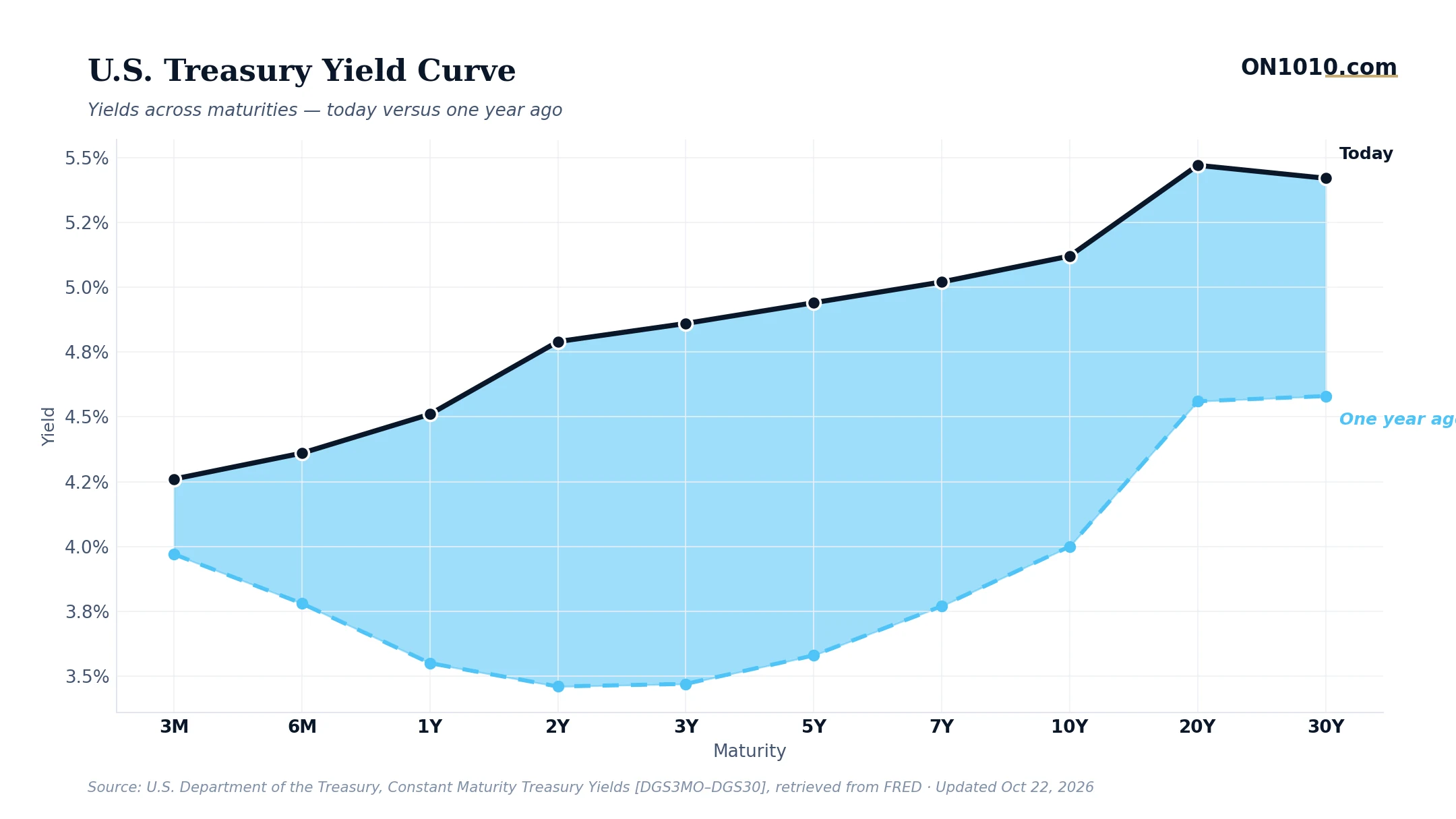
According to CNBC, bond markets are flashing stress signals across two seemingly unrelated corners of the credit world: the debt financing the AI buildout and the sovereign bonds of France. The connection most people will miss is that these aren’t separate stories. They are the same story told in different currencies.
Both involve borrowed money funding long-duration bets in an environment where the cost of carrying that debt keeps rising. AI infrastructure projects, data centers, chips, power capacity, are being financed with bonds that need to be repaid regardless of whether the productivity payoff arrives on schedule. French sovereign debt carries a different political risk, but the underlying pressure is identical: high long-term rates make every debt-funded project more expensive to sustain. And right now, long-term rates sit near the upper range of their historical record, with credit spreads also wide and still rising.
The deeper issue for AI financing is the gap between capital deployment and revenue generation. Firms are spending now, betting that AI will produce enough margin expansion to justify the cost of borrowing. If the productivity payoff is slower than the debt schedule, margins compress exactly when debt service is rising. That is the stress test the headline references, and it has not run its full course yet.
Historically, when credit spreads widen alongside rising long-term rates, investors have treated it as a signal to scrutinize the most leveraged parts of the market first. The question worth asking is which AI-adjacent balance sheets have the most refinancing risk in the next 12 to 24 months, and whether the revenue visibility behind that debt is actually there.
Bottom Line: When you finance a long-duration bet in a high-rate environment, the clock on your debt starts ticking before the payoff does. The bond market knows this, and right now it is asking questions that equity markets have not fully answered.
Read more: CNBC Top News
ON1010 Research is an independent publisher of economic education and is not a registered investment adviser, broker-dealer, or investment company. This content is for educational and informational purposes only and is not investment advice or a recommendation to buy, sell, or hold any security. Published under the publisher exemption recognized by Section 202(a)(11)(D) of the Investment Advisers Act of 1940 (Lowe v. SEC). Always consult a qualified financial professional before making any financial decision.
Free Research
The economy moves fast. We make sure you move faster.
Economic data, policy shifts, and market signals — delivered to your inbox.
Subscribe Free