
When the Bond Market Won’t Cooperate
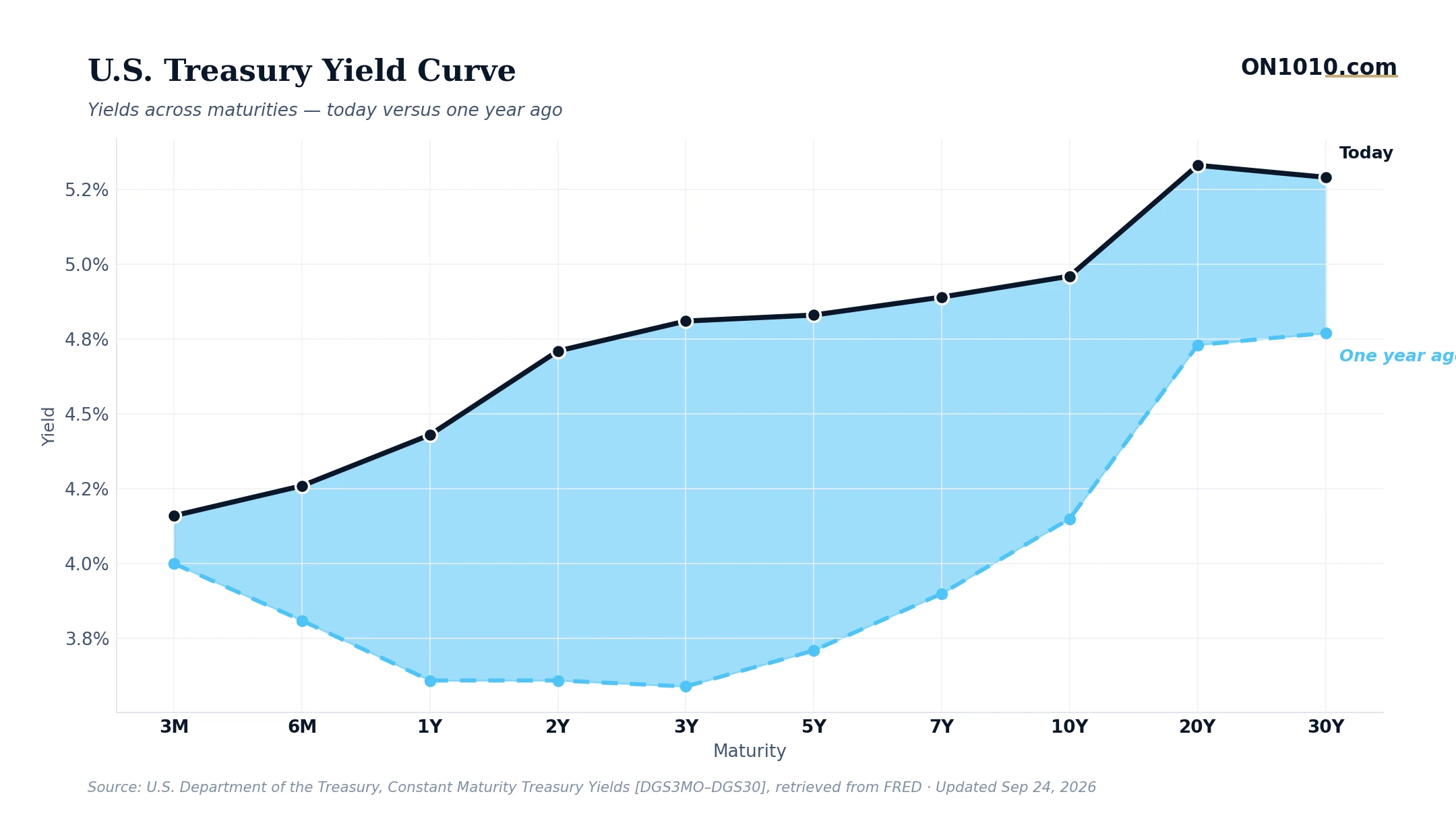
According to CNBC, incoming Fed Chair Kevin Warsh is walking into a trap that markets have largely ignored: a 10-year Treasury yield sitting at 4.96% while core inflation remains historically hot, leaving almost no room between the policy rate and the actual cost of borrowing throughout the economy.
Here’s the puzzle. Markets expect a hawkish Warsh Fed to signal resolve on inflation, which should calm bond investors. But surging long-term yields complicate that story in a structural way. The Fed controls the short end of the yield curve. The 10-year yield, which drives mortgage rates, corporate borrowing costs, and capital investment decisions, is set by the bond market itself. If investors believe inflation will stay sticky, they demand more compensation to hold long-duration debt, and yields climb regardless of what the Fed signals. The Fed’s credibility tool works best when the bond market believes it. When the bond market is already skeptical, more hawkish talk can actually push yields higher, tightening conditions in ways the Fed never explicitly chose.
The broader economy is already showing the strain of this dynamic. Long-term rates are sitting in the upper quarter of their historical range. Consumer sentiment remains near multi-decade lows, even as credit spreads are unusually tight, a combination that is genuinely unusual and worth watching. The growth gauge is near its historical midpoint, which sounds reassuring, but the monetary policy gauge hasn’t given businesses meaningful relief. Every percentage point on the 10-year yield is a direct tax on corporate capital allocation, refinancing decisions, and anyone who needs to borrow to grow.
Historically, investors have treated periods of high long-term yields combined with stubborn inflation as particularly difficult environments for duration-sensitive assets, while the knock-on effects for business investment tend to show up with a lag. The question Warsh faces isn’t just whether to be hawkish. It’s whether any policy signal can convince a skeptical bond market to bring yields back down.
Bottom Line: The Fed’s real constraint here is credibility, and a bond market at 4.96% on the 10-year is telling you it hasn’t fully bought the inflation-is-beaten narrative yet.
Read more: CNBC Economy
ON1010 Research is an independent publisher of economic education and is not a registered investment adviser, broker-dealer, or investment company. This content is for educational and informational purposes only and is not investment advice or a recommendation to buy, sell, or hold any security. Published under the publisher exemption recognized by Section 202(a)(11)(D) of the Investment Advisers Act of 1940 (Lowe v. SEC). Always consult a qualified financial professional before making any financial decision.
Free Research
The economy moves fast. We make sure you move faster.
Economic data, policy shifts, and market signals — delivered to your inbox.
Subscribe Free