
When the Bond Market Becomes Competition
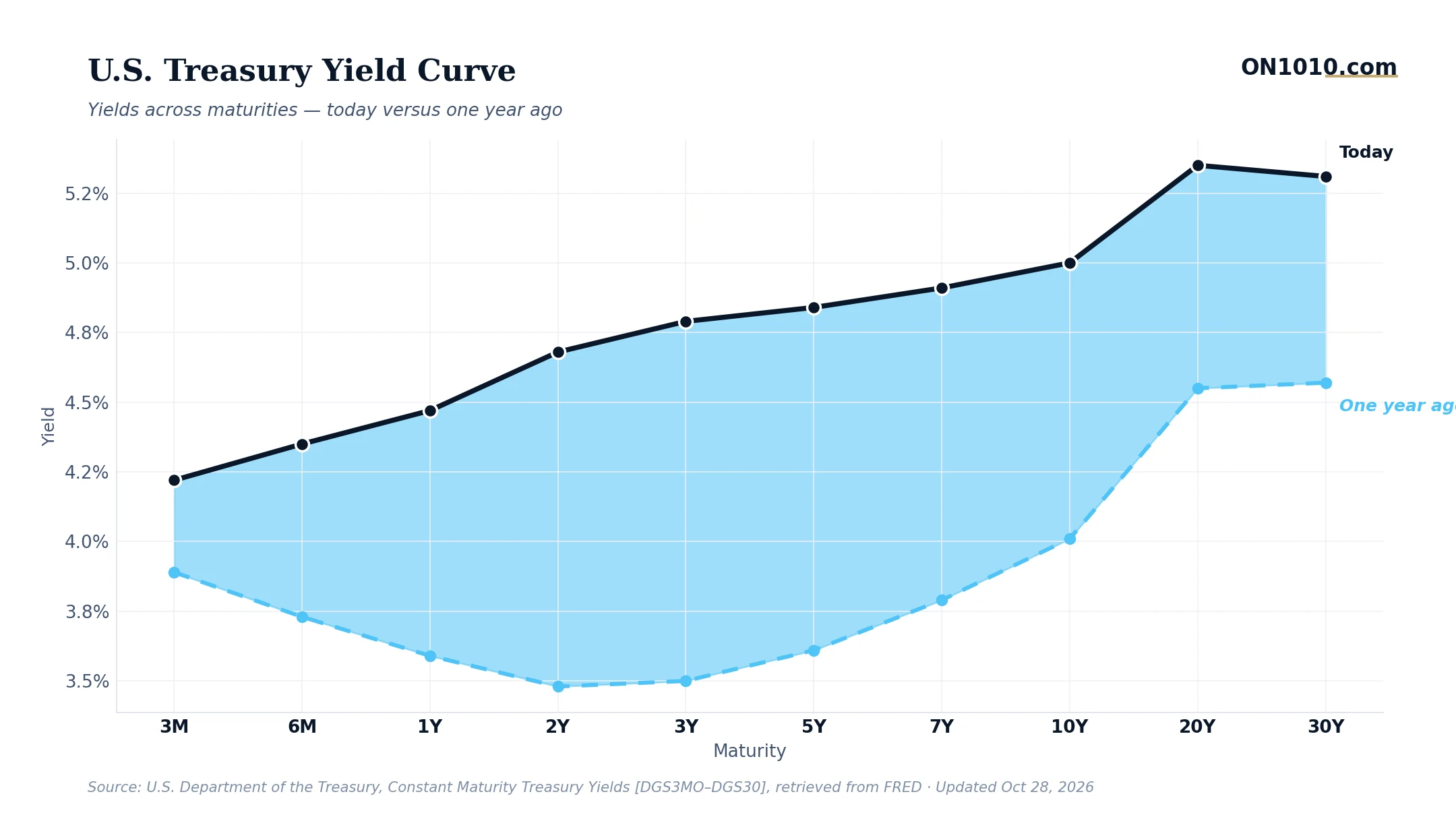
According to CNBC, investment experts are calling this one of the best environments for corporate bonds in recent memory, with Treasury yields sitting around 5% giving fixed income a level of appeal it hasn’t had in well over a decade. The interesting part is what that headline glosses over: this isn’t a story about bonds getting better. It’s a story about what wide credit spreads and high base rates are quietly telling us about the economic backdrop.
Here’s the fuller picture. Credit spreads are historically wide right now, meaning corporate bonds are offering a significant premium above Treasuries to compensate investors for default risk. Wide spreads are a feature when you’re buying, but they’re also a signal: the credit market is pricing in real uncertainty about corporate health. When spreads widen, bond investors are demanding more compensation, and that happens when they’re nervous about something. Combine that with monetary policy that remains restrictive by historical standards, long-term interest rates in the upper quarter of their entire history, and consumer sentiment near the weakest readings on record, and the “great opportunity in bonds” narrative deserves a second look alongside those stress signals.
Sector rotation data reinforces the point. Defensive sectors like utilities and consumer staples have been outperforming technology and communication services by a meaningful margin over the past month. That’s institutional money repositioning, and it rhymes with the bond market’s message: something in the growth story is making large allocators cautious.
Historically, investors have evaluated corporate bond entry points by weighing the all-in yield against the probability that issuers can service that debt through an economic slowdown. High nominal yields look attractive until margins compress and defaults rise. The question worth examining is whether 5% Treasury yields reflect an economy strong enough to support corporate balance sheets, or a Fed that has kept policy tight long enough to eventually squeeze them.
Bottom Line: A 5% yield environment is genuinely compelling on paper, but wide credit spreads are the market’s way of saying the math on corporate debt isn’t quite as clean as the headline yield suggests.
Read more: CNBC Top News
ON1010 Research is an independent publisher of economic education and is not a registered investment adviser, broker-dealer, or investment company. This content is for educational and informational purposes only and is not investment advice or a recommendation to buy, sell, or hold any security. Published under the publisher exemption recognized by Section 202(a)(11)(D) of the Investment Advisers Act of 1940 (Lowe v. SEC). Always consult a qualified financial professional before making any financial decision.
Free Research
The economy moves fast. We make sure you move faster.
Economic data, policy shifts, and market signals — delivered to your inbox.
Subscribe Free