
THE Fed Holds. The Real Question Is Whether It Still Can.
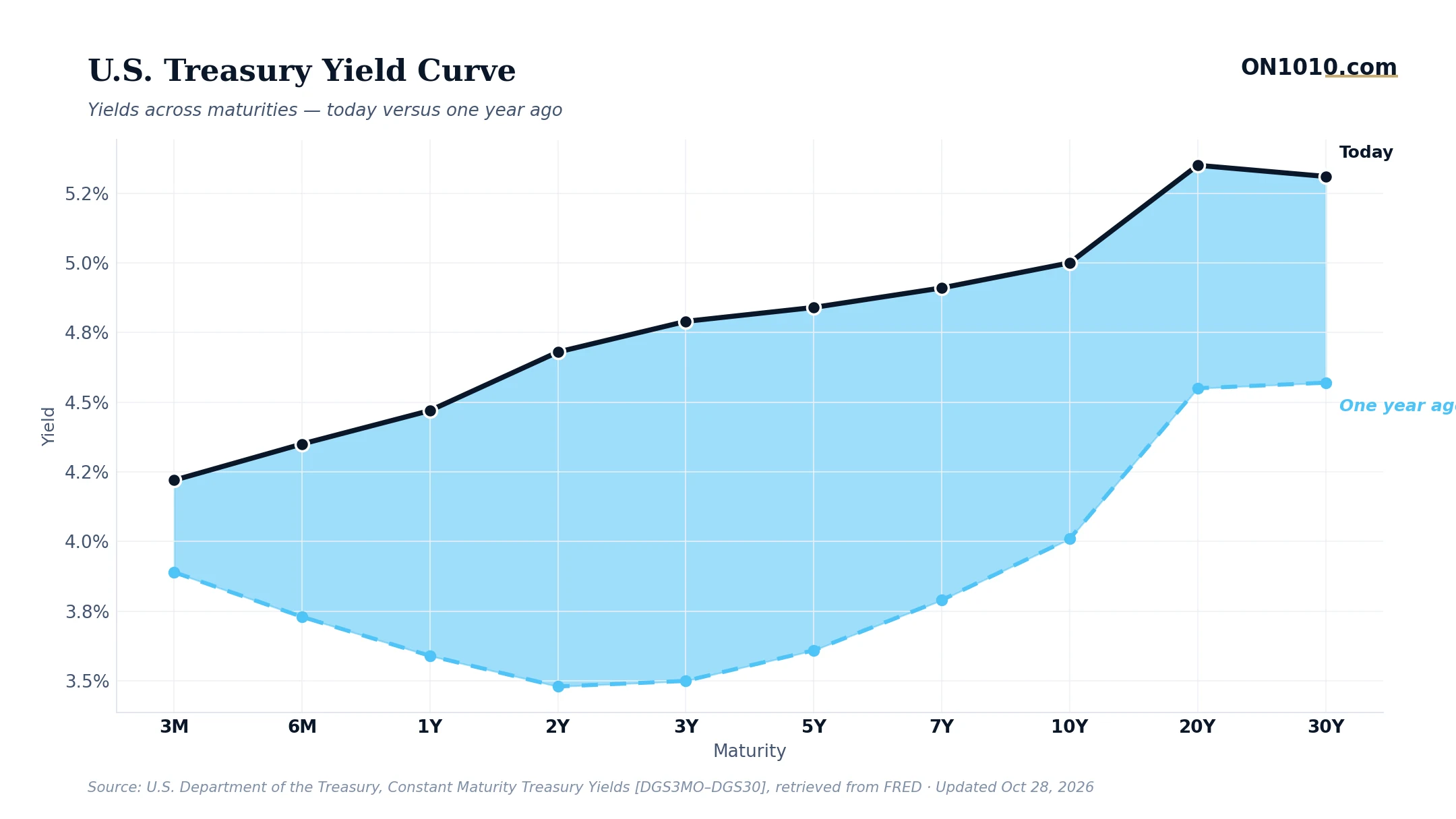
According to the Federal Reserve’s official press release, the FOMC voted to hold its policy rate steady at its October 28 meeting. No surprise there. But the decision itself is the least interesting part of what the Fed just communicated.
Here is the tension worth paying attention to: the Fed is sitting on a policy rate that remains restrictive by historical standards, while core inflation is still running hot relative to its own history. Cutting would risk reigniting price pressures that haven’t fully been beaten back. Holding means keeping a brake on business investment, credit formation, and the kind of capital allocation that drives real growth.
Credit spreads are wide by historical standards, a signal that the bond and credit markets are pricing in meaningful stress somewhere in the system. Long-term rates remain elevated compared to their historical range. Consumer sentiment is near multi-decade lows. Defensive sectors, including utilities, consumer staples, and health care, have dramatically outperformed technology and communication services over the past month. When institutional money rotates that decisively toward safety, the market is telegraphing that something feels fragile beneath the surface, even if the aggregate growth reading looks near its historical midpoint.
The arithmetic that matters here: historically, when monetary policy has been this restrictive alongside wide credit spreads and elevated long-term rates, a new recession began within 12 months roughly 18 to 20% of the time. That is not a forecast. It is a base rate worth knowing and testing against incoming data. The history also shows that both the policy rate and long-term rates have tended to drift lower from similar starting points, which is why the bond market’s behavior in the months ahead may tell us more than the Fed’s statement does today.
Historically, investors and business operators have treated a sustained hold at restrictive levels as a reason to scrutinize refinancing timelines, capital expenditure plans, and margin assumptions. The question isn’t whether the Fed wants to cut. The question is whether the data will give it permission to.
Bottom Line: The Fed is holding steady, but the broader signals around credit, rates, and market positioning suggest the economy is carrying more weight than the headline growth number implies.
Read more: Federal Reserve Press Releases
ON1010 Research is an independent publisher of economic education and is not a registered investment adviser, broker-dealer, or investment company. This content is for educational and informational purposes only and is not investment advice or a recommendation to buy, sell, or hold any security. Published under the publisher exemption recognized by Section 202(a)(11)(D) of the Investment Advisers Act of 1940 (Lowe v. SEC). Always consult a qualified financial professional before making any financial decision.
Free Research
The economy moves fast. We make sure you move faster.
Economic data, policy shifts, and market signals — delivered to your inbox.
Subscribe Free