
Economic Wire: Federal Reserve Board announces approval of application by T
A Canadian Bank Just Got a Green Light From the Fed. The Real Story Is What It Says About Cross-Border Capital.
According to a Federal Reserve press release, the Fed approved an application by The Bank of Nova Scotia, one of Canada’s “Big Six” banks, to expand its U.S. presence. The approval itself is routine. What makes it worth a second look is the timing.
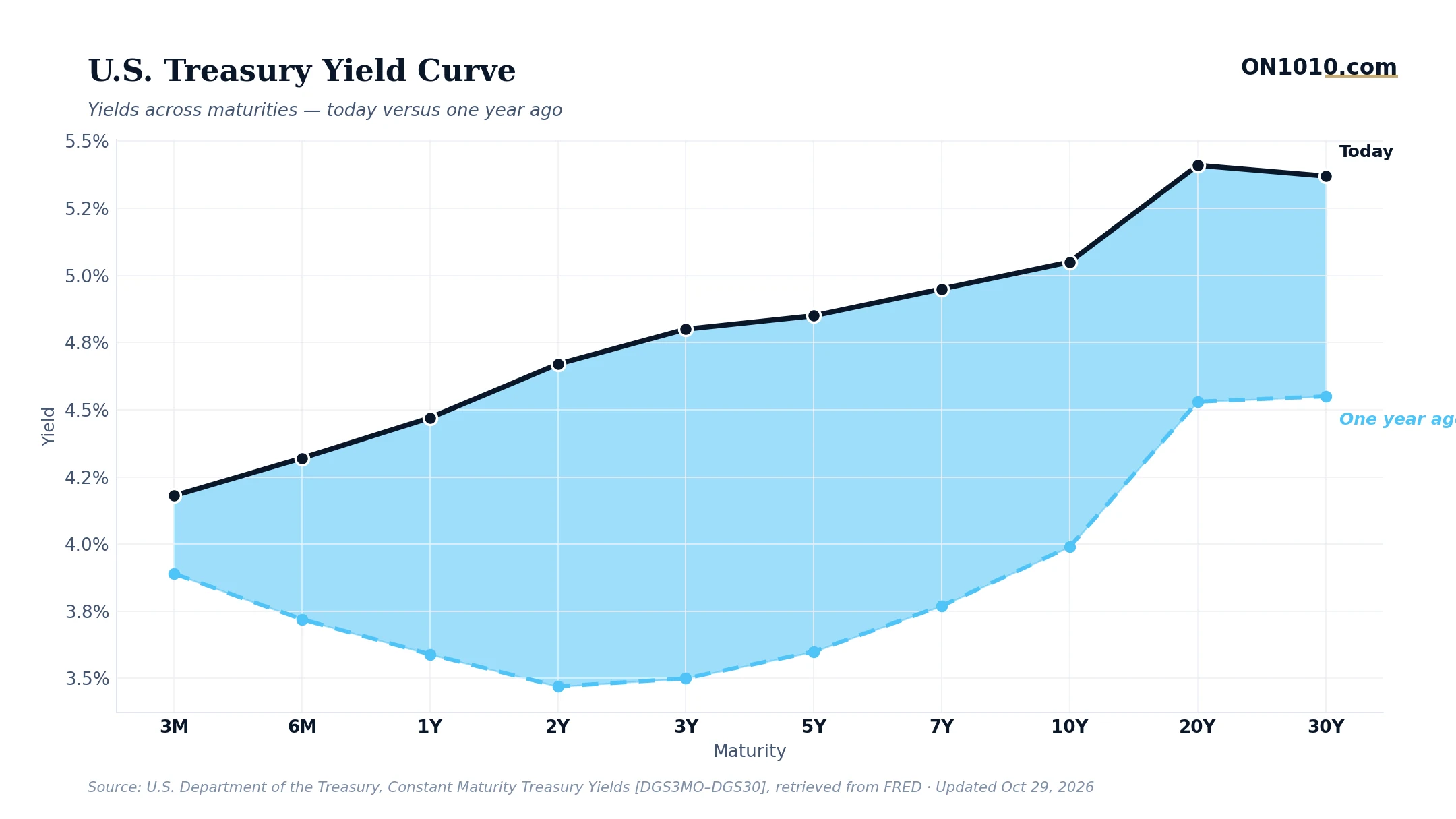
Cross-border banking applications don’t happen in a vacuum. They require significant regulatory preparation, capital commitments, and a long-term view of where growth opportunities lie. The fact that a major Canadian institution is deepening its U.S. footprint right now, while U.S. long-term interest rates sit near the upper range of their historical history and credit spreads remain elevated, says something about where sophisticated institutional capital sees value over the next business cycle.
This is classic follow-the-money analysis. When foreign banks expand into a market, they are making a balance sheet bet: that the risk-adjusted returns in that market justify the regulatory cost and capital allocation. The U.S. banking sector is operating in a genuinely complex environment right now. Margins have been squeezed by higher funding costs, commercial real estate exposure remains a concern, and consumer sentiment sits near historical lows. Yet the U.S. still represents the deepest, most liquid financial market on earth. Money flows to where it is treated best, and apparently, even in a high-rate, wide-spread environment, U.S. banking still clears that bar for Scotiabank.
Historically, investors have tracked foreign bank entry into U.S. markets as a long-cycle signal: institutions with multi-decade planning horizons tend to enter at points of stress, not euphoria. The question this raises is whether the timing reflects a contrarian view that U.S. financial conditions are closer to a peak in tightness than a sustained new normal.
Bottom Line: When a major foreign bank commits capital to expand in the U.S. during a period of restrictive monetary policy and wide credit spreads, it is worth asking what they are seeing that the consensus might be discounting.
Read more: Federal Reserve Press Releases
ON1010 Research is an independent publisher of economic education and is not a registered investment adviser, broker-dealer, or investment company. This content is for educational and informational purposes only and is not investment advice or a recommendation to buy, sell, or hold any security. Published under the publisher exemption recognized by Section 202(a)(11)(D) of the Investment Advisers Act of 1940 (Lowe v. SEC). Always consult a qualified financial professional before making any financial decision.
Free Research
The economy moves fast. We make sure you move faster.
Economic data, policy shifts, and market signals — delivered to your inbox.
Subscribe Free