
The Iran War May Be Ending. The Risk Premium Removal Is What Investors Are Watching.
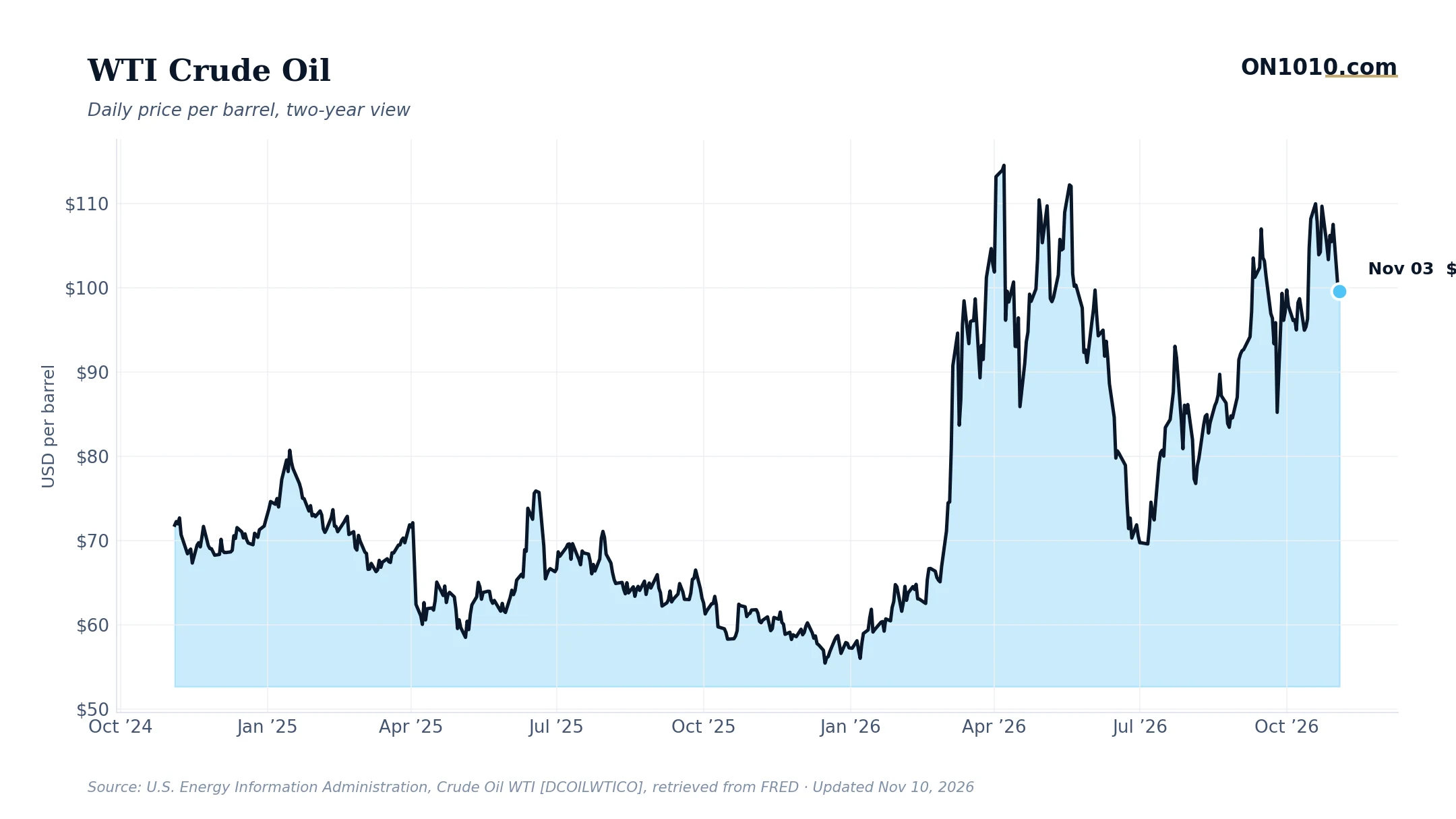
According to CNBC, President Trump declared that Iran’s military is “effectively over,” citing the destruction of its navy and an economy ravaged by inflation, and suggested the conflict would end “fairly soon.” The headline sounds like resolution. The harder question is whether markets are pricing that resolution correctly, given everything else happening at the same time.
Geopolitical risk premiums work in both directions. When a conflict begins, energy prices spike and capital retreats from risk assets toward safe havens. When a conflict ends, those premiums unwind. The Strait of Hormuz handles roughly 20% of global oil flow, so any credible de-escalation signal carries real weight for energy markets and the global supply chains that depend on predictable input costs. But the word “credible” is doing a lot of work there. Presidential declarations and battlefield reality often run on different timelines.
Here is what makes the current backdrop genuinely complicated. The economic gauges are flashing a mixed picture that makes simple optimism hard to sustain. Core inflation is running hotter than roughly nine of every ten months in the historical record. Monetary policy is restrictive. Long-term interest rates are in the upper quarter of their history. Credit spreads are wide. Consumer sentiment sits near historic lows. And sector rotation shows institutional money moving decisively into defensives, with health care, consumer staples, and real estate leading while technology has underperformed SPY by over 10% in the past month. Markets are behaving as if uncertainty is rising, not falling.
Historically, investors have watched these kinds of geopolitical turning points closely not for the headline itself but for what it means for sustained capital investment. If energy costs stabilize and supply chain uncertainty eases, that is a potential tailwind for corporate margins at a moment when margins are under pressure from sticky inflation and tight credit. The question worth tracking is whether the conditions that produced the conflict (and its economic disruptions) have actually changed, or whether the announcement simply narrows one specific risk while the broader macro pressures persist.
Bottom Line: A war ending is a real development with real economic implications, but the economic backdrop surrounding this one is still carrying significant friction, and declaring the risk premium gone before the conditions confirm it is how investors get caught flatfooted.
Read more: CNBC Top News
ON1010 Research is an independent publisher of economic education and is not a registered investment adviser, broker-dealer, or investment company. This content is for educational and informational purposes only and is not investment advice or a recommendation to buy, sell, or hold any security. Published under the publisher exemption recognized by Section 202(a)(11)(D) of the Investment Advisers Act of 1940 (Lowe v. SEC). Always consult a qualified financial professional before making any financial decision.
Free Research
The economy moves fast. We make sure you move faster.
Economic data, policy shifts, and market signals — delivered to your inbox.
Subscribe Free