
The Four-Week Rate Reprieve Just Ended. The Inflation Problem Didn’t.
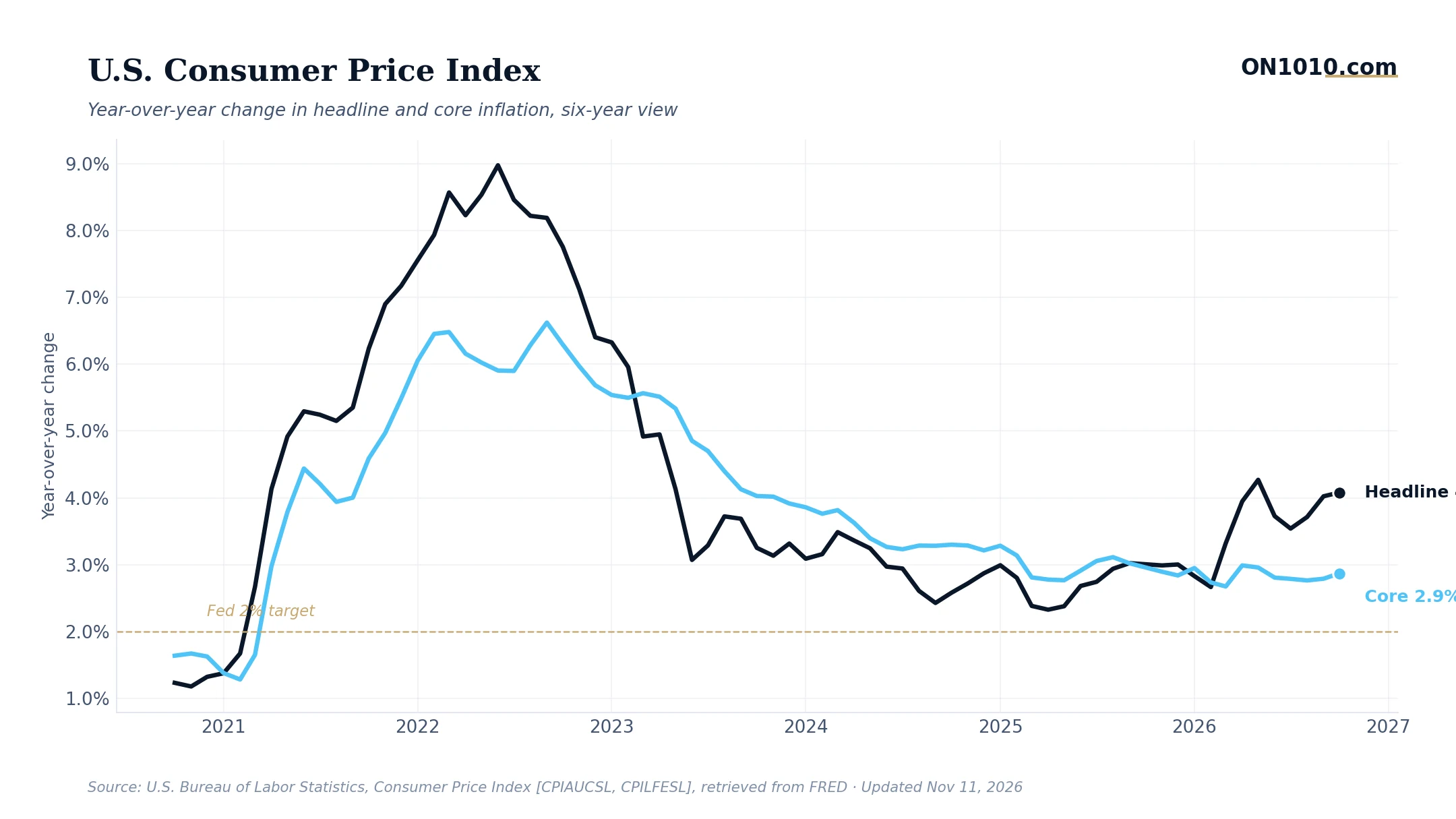
According to CNBC, mortgage rates jumped sharply higher after a hotter-than-expected inflation report, snapping four consecutive weeks of declines. The brief reprieve is over. The underlying problem was never resolved.
Here is what the four-week easing obscured: inflation running higher than nine out of every ten months in the historical record is not a backdrop in which mortgage rates sustainably fall. The CPI reading came in at 337.476, and the bond market responded exactly as you would expect. When inflation surprises to the upside, bond investors demand higher yields to protect their purchasing power, which pushes bond prices down and mortgage rates up. The mechanism is simple and reliable. The only real question was always whether the brief rate dip reflected a genuine shift in the inflation trajectory or just noise. The November data answered that.
This matters for more than homebuyers. Monetary policy is already sitting in the upper range of its historical tightening cycle, and the real (inflation-adjusted) policy rate remains restrictive. The Fed has less room to ease than markets have periodically priced in. Historically, when long-term interest rates have held in the upper quarter of their historical range alongside wide credit spreads and weak consumer sentiment, the combination has produced real stress in rate-sensitive sectors, particularly housing and commercial real estate. Sector rotation in equities is reinforcing that read: defensive sectors like consumer staples and health care have significantly outperformed over the past month, while technology has lagged sharply. That is not conclusive, but capital tends to move toward safety before the economic data fully confirms the reason.
Historically, investors and business operators have used moments like this to stress-test their assumptions about financing costs. The question worth asking is whether plans built on the assumption of falling rates still hold if rates stay higher for longer than expected.
Bottom Line: Four weeks of falling mortgage rates were a pause in the story, not the ending. Sticky inflation means sticky rates, and the bond market is saying so clearly.
Read more: CNBC Top News
ON1010 Research is an independent publisher of economic education and is not a registered investment adviser, broker-dealer, or investment company. This content is for educational and informational purposes only and is not investment advice or a recommendation to buy, sell, or hold any security. Published under the publisher exemption recognized by Section 202(a)(11)(D) of the Investment Advisers Act of 1940 (Lowe v. SEC). Always consult a qualified financial professional before making any financial decision.
Free Research
The economy moves fast. We make sure you move faster.
Economic data, policy shifts, and market signals — delivered to your inbox.
Subscribe Free