
Economic Wire: 10-year Treasury yield jumps back above 5% as oil gains and
The 5% Threshold Is Back. The Real Question Is Whether It Holds.
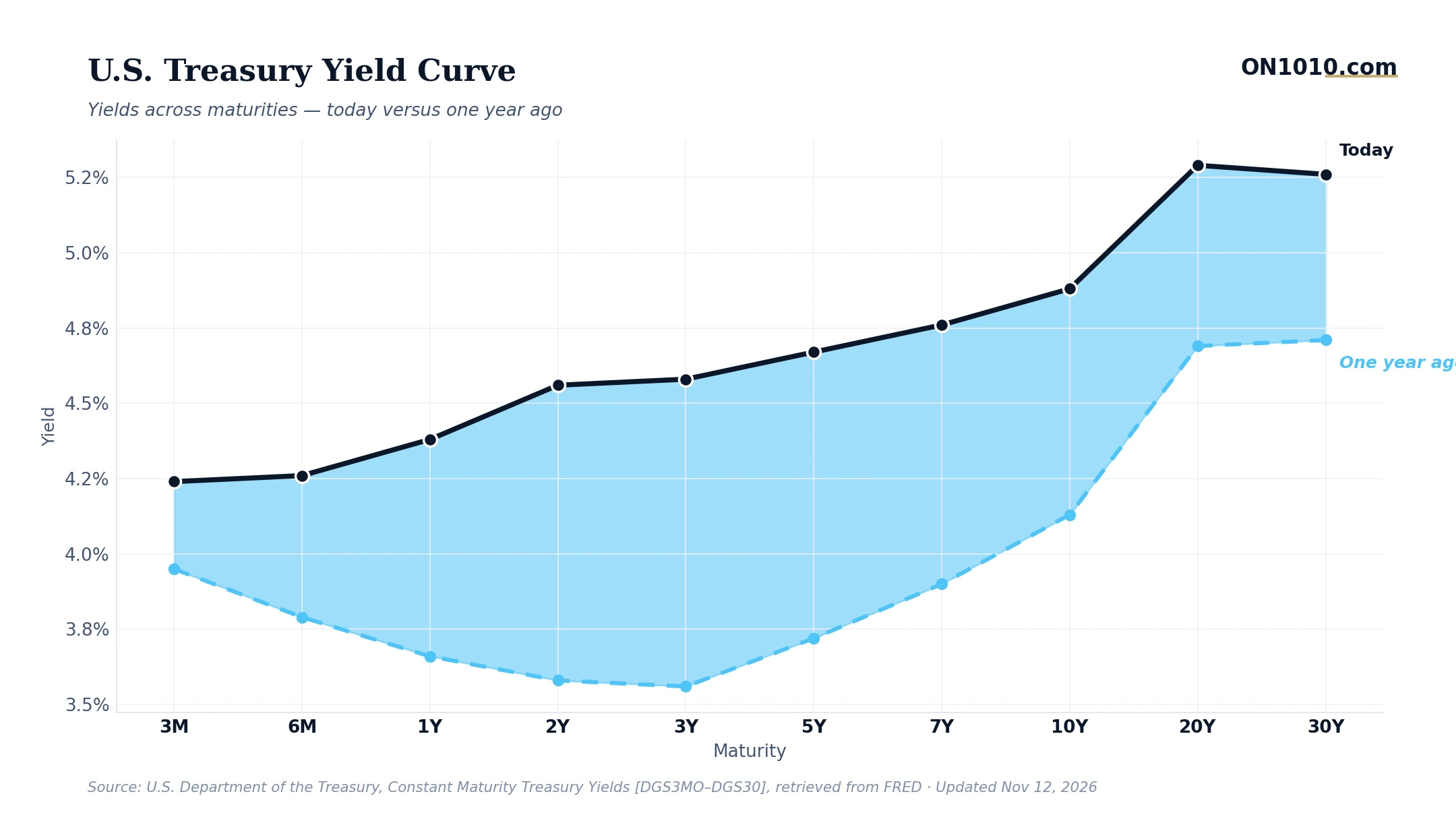
According to CNBC, the 10-year Treasury yield climbed back above 5% when bond markets reopened Wednesday following the Veterans Day holiday, with oil prices rising and expectations building for additional Fed rate hikes. The last verified close before the holiday put the 10-year at 4.88%. The jump back through 5% in a single session is the kind of move that tends to ripple.
Here is what makes this more than a round-number story. The Fed’s current target rate sits at 3.75% to 4.0%, and core inflation is running very hot by historical standards, higher than roughly nine of every ten months on record. That means the real policy rate, the Fed funds rate minus inflation, may still be less restrictive than it looks on paper. If the market is pricing in more hikes, bond investors are essentially saying the Fed has more work to do, and they want compensation to hold duration while that work plays out.
Oil adding pressure matters here too. Energy is one of the stickier inputs in the inflation complex. When oil prices rise alongside already-elevated core inflation, it complicates the Fed’s path and extends the period of elevated rates. Wider credit spreads, which are currently near the high end of their historical range, tell a similar story: the credit market is already pricing meaningful stress. That combination, high long-term rates, wide spreads, tight monetary policy, applies direct friction to business investment, the primary engine of economic growth. Companies refinancing debt, extending projects, or evaluating capital expenditures are all running those numbers against a higher hurdle rate today than six months ago.
Historically, when long-term rates have been in the upper quarter of their historical range alongside tight monetary policy, investors have focused on duration risk in fixed-income portfolios and on the compression of equity multiples, since higher rates make future earnings worth less in today’s dollars. The setup that matters to watch is whether the economy’s growth holds up well enough to justify these rates, or whether the lag effects of tight policy begin to show up in margins and hiring. Historically, that reckoning has taken longer to arrive than most people expect, and then arrived faster than anyone was ready for.
Bottom Line: A 10-year yield above 5% with credit spreads already wide and consumer sentiment near historic lows is a reminder that the economy is running with elevated financial stress baked in, even if the headline growth numbers haven’t broken yet.
Read more: CNBC Top News
ON1010 Research is an independent publisher of economic education and is not a registered investment adviser, broker-dealer, or investment company. This content is for educational and informational purposes only and is not investment advice or a recommendation to buy, sell, or hold any security. Published under the publisher exemption recognized by Section 202(a)(11)(D) of the Investment Advisers Act of 1940 (Lowe v. SEC). Always consult a qualified financial professional before making any financial decision.
Free Research
The economy moves fast. We make sure you move faster.
Economic data, policy shifts, and market signals — delivered to your inbox.
Subscribe Free