
Bond Markets Are Betting Inflation Stays Tame. The Rest of the Data Isn’t So Sure.
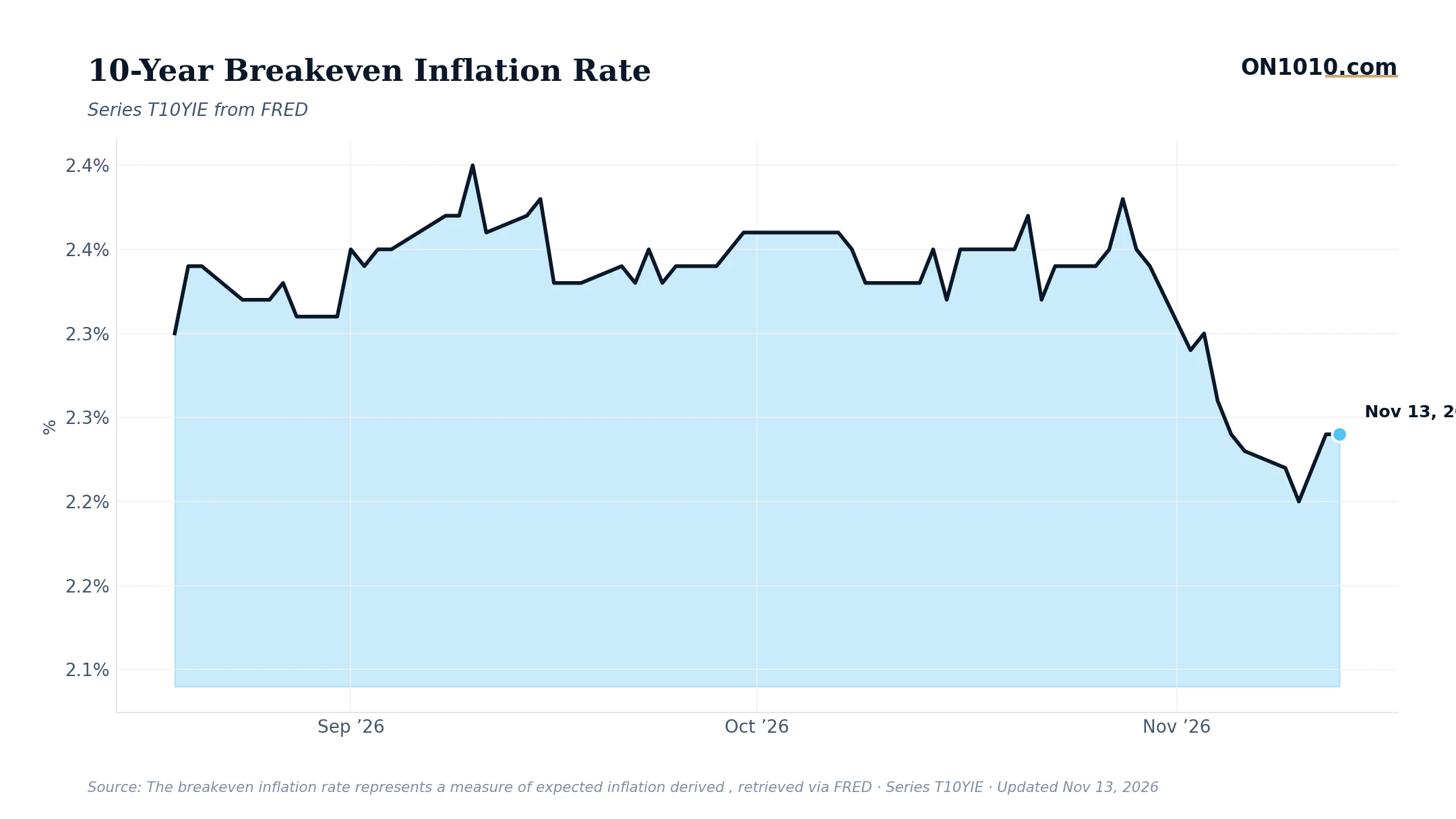
The 10-year breakeven inflation rate has barely moved this week, sitting at 2.24% through November 13. For a number that reflects what bond investors collectively expect inflation to average over the next decade, that steadiness looks almost serene. The puzzle is that almost nothing else in the economy looks serene right now.
The breakeven rate is the gap between the yield on a regular 10-year Treasury and the yield on a 10-year TIPS (Treasury Inflation-Protected Security). When that spread sits at 2.24%, it means bond markets are pricing in roughly 2.24% annual inflation for the next ten years. That’s just barely above the Fed’s 2% target. Calm on paper.
But pull back and look at the full picture. Core inflation is running historically hot, well above what most months on record have looked like. The Fed’s real policy rate is high relative to history, and long-term interest rates have been rising. Credit spreads are wide and moving, signaling stress in the credit markets. Consumer sentiment is near its historical floor. And in equity markets, defensive sectors like health care, real estate, and utilities have been beating the S&P 500 by meaningful margins over the past month, while technology has lagged by more than 7 percentage points. That’s not a growth-confident market.
Historically, when long-term inflation expectations stayed anchored while real borrowing costs remained high, it reflected one of two things: either investors genuinely believed the Fed had the situation under control, or they were underpricing the risk that something breaks before inflation fully resolves. The distinction matters enormously for businesses making multi-year capital commitments, because the cost of being wrong in one direction looks very different from the cost of being wrong in the other. In past cycles, prolonged stretches of high real rates combined with wide credit spreads have shown recession odds over the following year running roughly 18-20%, based on historical base rates, though no two cycles are identical and past patterns are not predictions.
Bottom Line: The bond market’s inflation forecast looks almost too calm given what every other gauge is showing. Worth asking whether that calm reflects genuine confidence in the Fed, or whether it’s the last piece of the puzzle that hasn’t moved yet.
Source: Federal Reserve Economic Data (FRED)
ON1010 Research is an independent publisher of economic education and is not a registered investment adviser, broker-dealer, or investment company. This content is for educational and informational purposes only and is not investment advice or a recommendation to buy, sell, or hold any security. Published under the publisher exemption recognized by Section 202(a)(11)(D) of the Investment Advisers Act of 1940 (Lowe v. SEC). Always consult a qualified financial professional before making any financial decision.
Free Research
The economy moves fast. We make sure you move faster.
Economic data, policy shifts, and market signals — delivered to your inbox.
Subscribe Free