
The Fed Is Holding Steady. The Real Question Is Whether It Can.
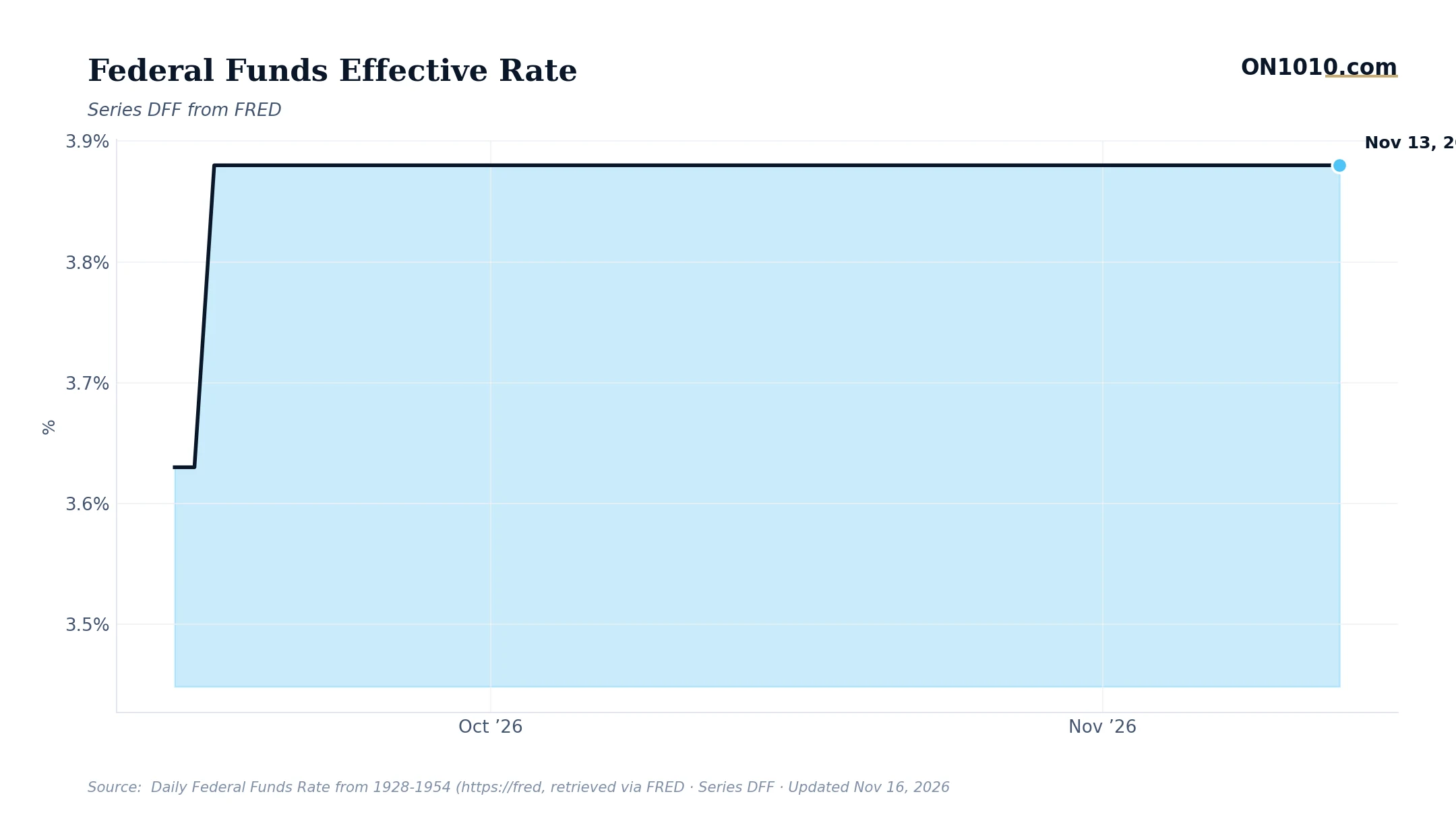
The effective federal funds rate has sat at 3.88% for six consecutive days, locked precisely in the middle of the Fed’s target range. No drift. No surprise. The overnight lending market is doing exactly what it is supposed to do.
That stability is worth noting, but the stillness of the rate itself may be the least interesting part of the picture right now.
Here is the tension: monetary policy is running restrictive relative to most of the past three decades, long-term interest rates are pressing higher, credit spreads are widening, and core inflation remains well above its historical norm. The Fed is holding the rate flat, but the broader financial conditions around that rate are quietly tightening on their own. When long-term rates rise while the Fed stands pat, borrowers feel it anyway. The rate doesn’t have to move to tighten conditions.
The economic gauges add another layer of caution. From periods when monetary policy has been this restrictive relative to history, a recession began within the following 12 months about 18% of the time. When long-term rates were this elevated, that figure rises to roughly 20%. Neither number is alarming on its own. Together, and alongside historically weak consumer sentiment, they form a backdrop that deserves attention. That is base rate information, not a forecast.
Historically, when the funds rate has held steady against rising long-term rates and widening credit spreads, the question businesses and capital allocators have focused on is duration risk: the cost of borrowing at the long end, where most real investment actually gets financed. A flat overnight rate offers little relief when the 10-year is moving.
Bottom Line: The Fed hasn’t moved, but financial conditions may be moving for it. The question to keep watching is whether long-term rates stabilize here or keep climbing, because that is where the real pressure on business investment and refinancing costs is building.
Source: Federal Reserve Economic Data (FRED)
ON1010 Research is an independent publisher of economic education and is not a registered investment adviser, broker-dealer, or investment company. This content is for educational and informational purposes only and is not investment advice or a recommendation to buy, sell, or hold any security. Published under the publisher exemption recognized by Section 202(a)(11)(D) of the Investment Advisers Act of 1940 (Lowe v. SEC). Always consult a qualified financial professional before making any financial decision.
Free Research
The economy moves fast. We make sure you move faster.
Economic data, policy shifts, and market signals — delivered to your inbox.
Subscribe Free