
The Fed’s Rate Hasn’t Moved. That Steadiness Deserves a Second Look.
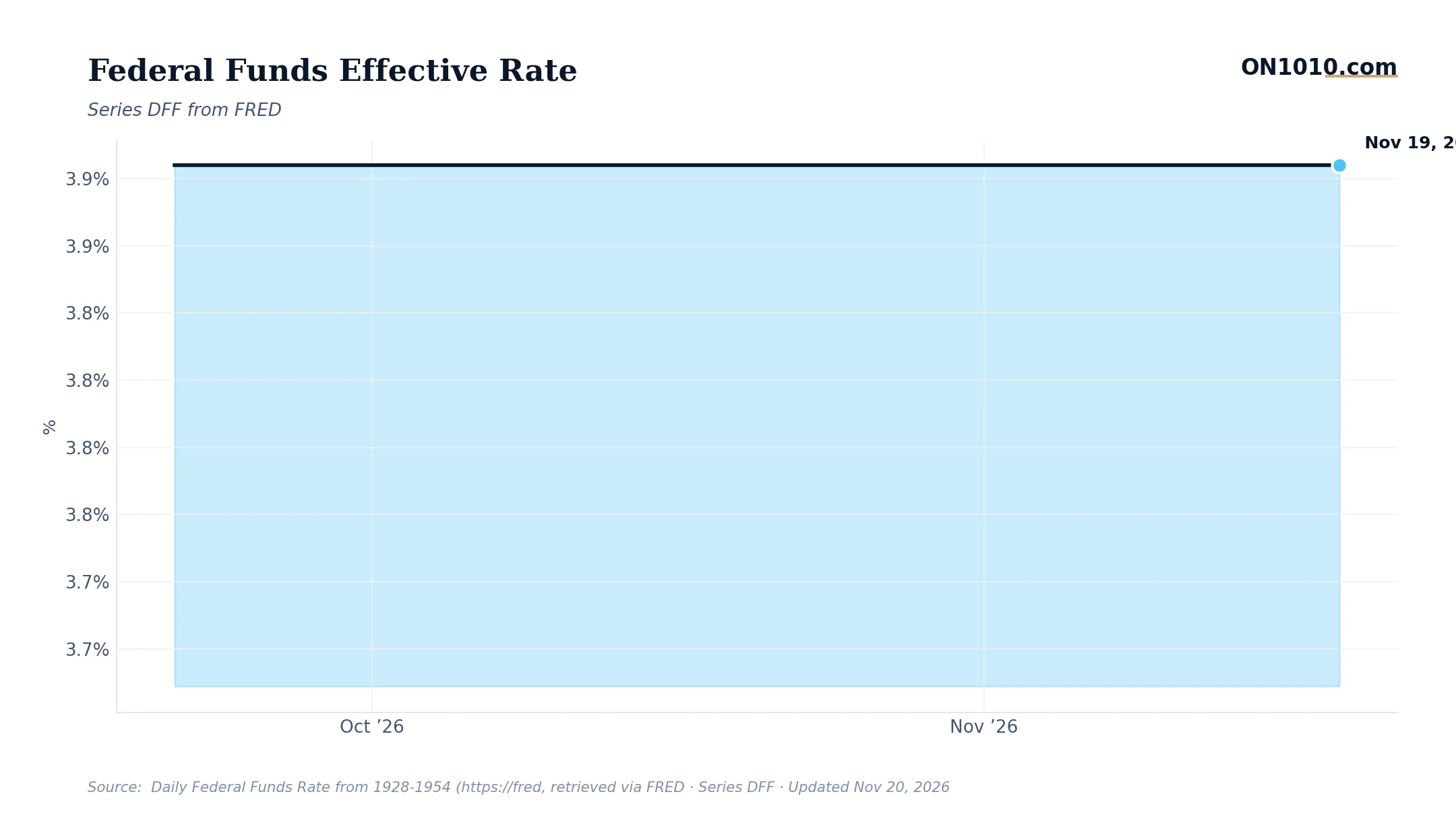
The effective federal funds rate held at 3.88% for the sixth straight session. No drama in the overnight market, no deviation from target. Banks are borrowing from each other at exactly the rate the Fed intends. But the stillness in this number sits inside an economic backdrop that is anything but still.
Here is what makes 3.88% worth thinking about right now. Core inflation is running near the top of its historical range, which means the real policy rate, the fed funds rate minus inflation, is positive but not by as much as the headline rate implies. The Fed is restrictive, but the cushion between where rates sit and where inflation sits is thin. Meanwhile, long-term rates remain elevated by historical standards, credit spreads are wide and widening, and consumer sentiment is near the bottom of its historical range. Each of those signals, taken individually, is manageable. Together, they describe an economy where the cost of money is high and the confidence to borrow is low.
The market is picking up on something. Technology stocks have dropped sharply relative to the broader market over the past month, while consumer staples, utilities, real estate, and health care have all outperformed by wide margins. When capital rotates that decisively toward defensive sectors, it often reflects concerns that earnings growth in cyclical businesses is harder to sustain at current interest rate levels. Historically, when the policy rate has been this elevated relative to its long-run average, a recession has followed within twelve months about 18% of the time. That is a minority outcome, but it is not a rare one.
For businesses and capital allocators, the core question is duration. Historically, periods where short-term rates hold steady while long-term rates stay elevated have forced companies to make real choices about refinancing timing and project payback horizons. The rate being stable is not the same as conditions being easy.
Bottom Line: 3.88% is just a number until you map it against everything around it. The Fed is holding steady, but the broader dashboard of credit stress, market positioning, and elevated uncertainty suggests the system is absorbing that steadiness with more difficulty than the calm overnight rate would imply.
Source: Federal Reserve Economic Data (FRED)
ON1010 Research is an independent publisher of economic education and is not a registered investment adviser, broker-dealer, or investment company. This content is for educational and informational purposes only and is not investment advice or a recommendation to buy, sell, or hold any security. Published under the publisher exemption recognized by Section 202(a)(11)(D) of the Investment Advisers Act of 1940 (Lowe v. SEC). Always consult a qualified financial professional before making any financial decision.
Free Research
The economy moves fast. We make sure you move faster.
Economic data, policy shifts, and market signals — delivered to your inbox.
Subscribe Free