
Mortgage Rates Are Falling. The Housing Market Still Feels Frozen.
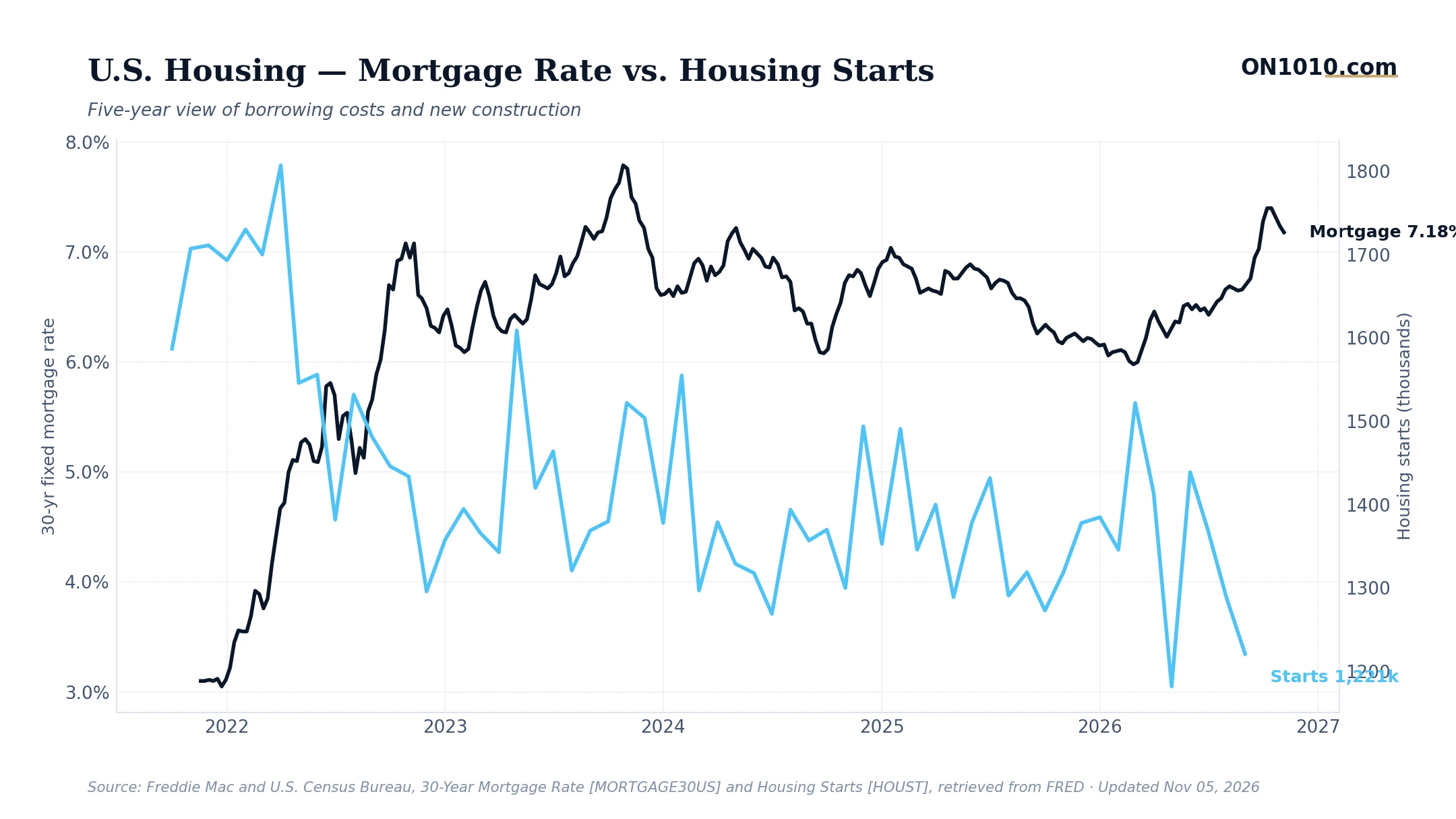
The 30-year mortgage rate dropped to 7.18% in the first week of November, down from 7.24% the week before and from a recent peak of 7.40% in mid-October. That six-week slide of 22 basis points sounds like progress. For most would-be homebuyers, it barely registers.
Here’s the context that matters. Rates have now been above 7% for five consecutive weeks. Before 2022, the last time the 30-year rate touched 7% was 2002. The current level sits in the upper quarter of its entire recorded history, which means conditions are genuinely tight by any long-run measure. A small downward drift doesn’t change the structural picture.
What makes this interesting is what’s happening around housing in the broader economy. Credit spreads are wide and rising. Consumer sentiment is near historic lows. Defensive sectors like consumer staples, health care, and real estate have significantly outperformed growth sectors over the past month, and real estate’s relative strength is an unusual signal worth watching. That’s the market pricing in a world where yields eventually come down, even as today’s mortgage rate remains painful.
The lock-in effect is the structural story here. Roughly two-thirds of existing homeowners hold mortgages below 4%. Selling means giving up a 4% loan and stepping into a 7% one. That math keeps inventory off the market, which keeps home prices elevated despite weak demand. High rates typically cool prices through reduced demand. When supply also shrinks in response to high rates, the normal cooling mechanism short-circuits.
Historically, sustained periods of long-term rates in the upper quarter of their range have coincided with meaningful slowdowns in housing activity and, in about 20% of cases, the beginning of a broader recession within a year. That is a base rate, not a forecast.
Bottom Line: Mortgage rates are easing slightly, but the housing market’s real problem is structural: millions of homeowners are locked into rates they can’t afford to give up, keeping supply scarce even as demand softens. The question for the months ahead is whether rates fall fast enough to unlock that inventory before affordability exhaustion sets in on the buyer side.
Source: Federal Reserve Economic Data (FRED)
ON1010 Research is an independent publisher of economic education and is not a registered investment adviser, broker-dealer, or investment company. This content is for educational and informational purposes only and is not investment advice or a recommendation to buy, sell, or hold any security. Published under the publisher exemption recognized by Section 202(a)(11)(D) of the Investment Advisers Act of 1940 (Lowe v. SEC). Always consult a qualified financial professional before making any financial decision.
Free Research
The economy moves fast. We make sure you move faster.
Economic data, policy shifts, and market signals — delivered to your inbox.
Subscribe Free