
Mortgage Rates Are Falling. The Housing Market Still Isn’t Moving.
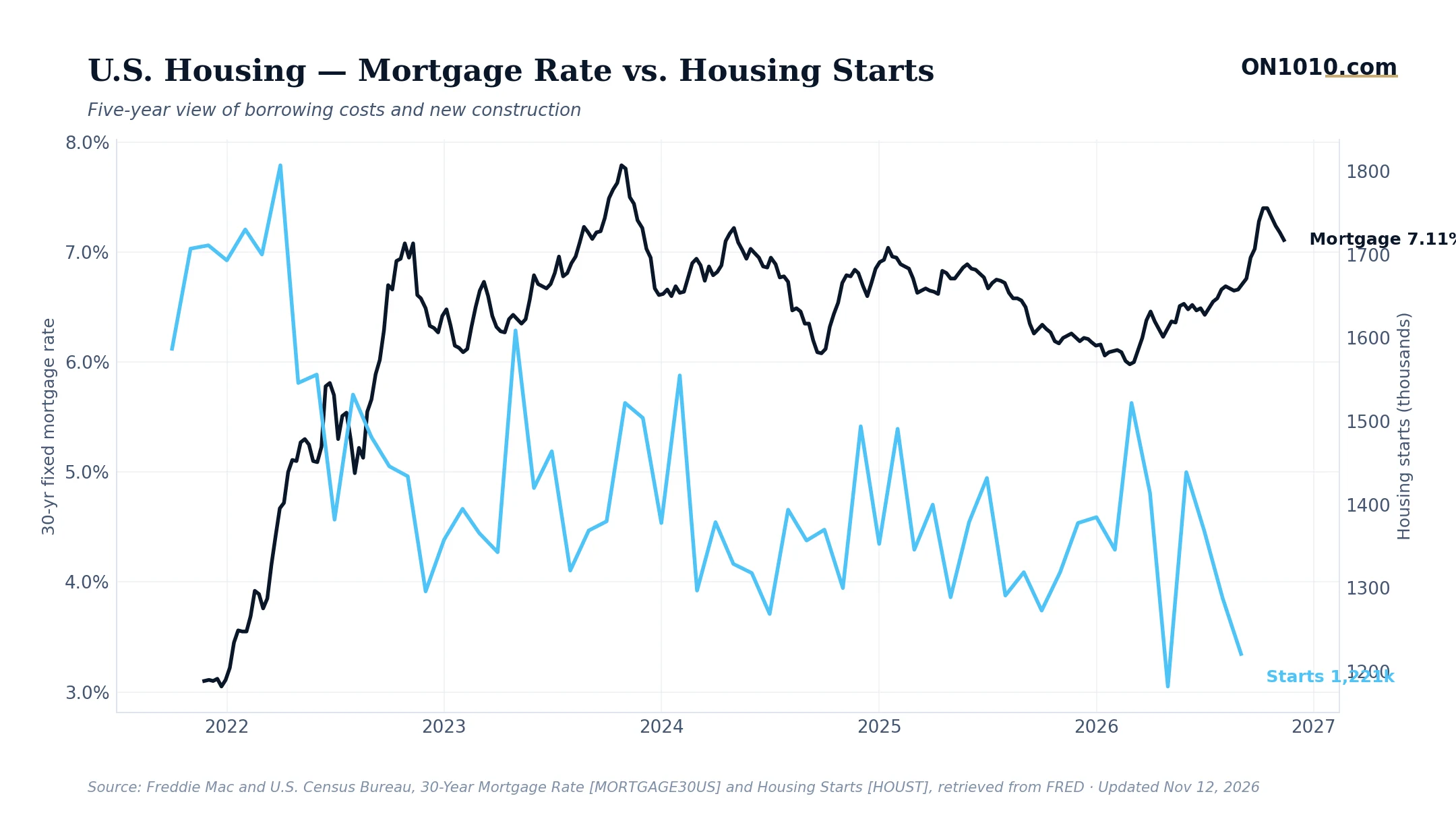
The 30-year mortgage rate dropped to 7.11% this week, down from 7.18% the week before and the fifth consecutive weekly decline from a recent peak of 7.40%. That’s real movement. The problem is where rates are still sitting.
Seven percent isn’t relief. It’s the new ceiling that replaced the old floor. For most of the decade before 2022, borrowers locked in rates between 3% and 4%. Anyone who bought or refinanced during that window has almost no financial incentive to move, which means the existing home inventory that normally oils the housing market isn’t showing up.
This dynamic, sometimes called the “lock-in effect”, has compressed housing turnover to its lowest levels in decades. Homebuilders have partially filled the gap, but they can only build so fast. And new construction homes typically carry a price premium that stretches already-strained affordability math. The broader context makes this harder: long-term interest rates sit in the upper quarter of their historical range, credit spreads are wide (signaling stress in lending conditions), and consumer sentiment is near historical lows. Sector rotation in markets is running heavily defensive, with real estate actually outperforming many offensive sectors lately. That’s worth watching carefully rather than cheering, because defensive rotation can signal investors repositioning ahead of economic softness, not just bargain-hunting in beaten-down sectors.
Historically, when rates decline gradually from a peak, housing activity has tended to recover with a significant lag, sometimes 6 to 12 months behind the rate move, because buyer confidence and inventory need time to rebuild together. Rate relief alone rarely unlocks a frozen market. The question that matters for anyone watching the housing supply chain, from lumber to appliances to mortgage originators, is whether this five-week slide has legs, or whether sticky inflation and a restrictive Fed keep rates elevated long enough to extend the freeze.
Bottom Line: Rates are moving in the right direction, but 7.11% is still a world away from the rates that defined the last decade of American homeownership. The lock-in effect isn’t easing yet, which means the housing market’s real test isn’t whether rates fall a little further, it’s whether they fall far enough to change behavior.
Source: Federal Reserve Economic Data (FRED)
ON1010 Research is an independent publisher of economic education and is not a registered investment adviser, broker-dealer, or investment company. This content is for educational and informational purposes only and is not investment advice or a recommendation to buy, sell, or hold any security. Published under the publisher exemption recognized by Section 202(a)(11)(D) of the Investment Advisers Act of 1940 (Lowe v. SEC). Always consult a qualified financial professional before making any financial decision.
Free Research
The economy moves fast. We make sure you move faster.
Economic data, policy shifts, and market signals — delivered to your inbox.
Subscribe Free