
When Diplomacy Moves Oil Faster Than Bombs Do
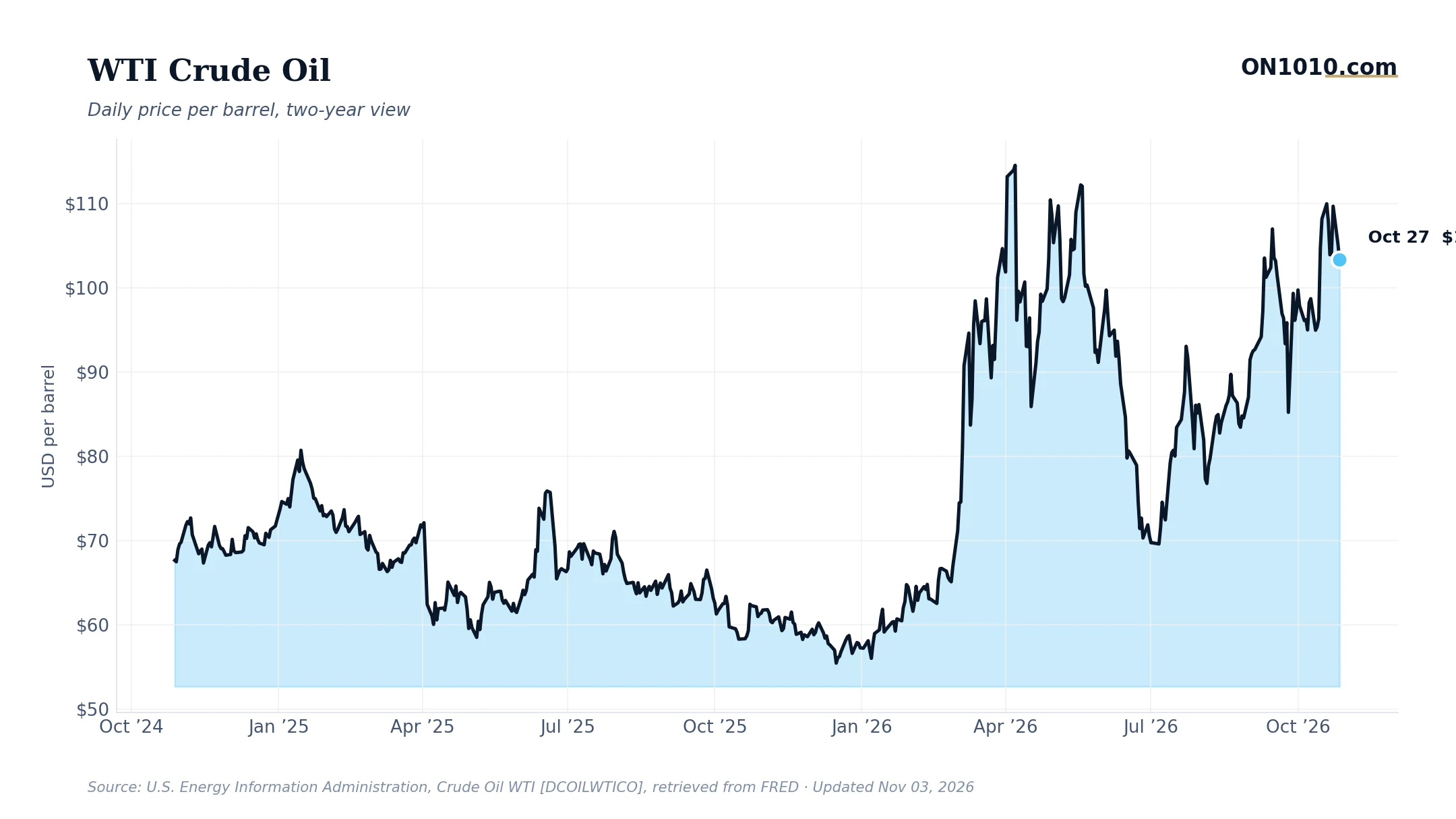
According to CNBC, U.S. crude has pulled back below $95 per barrel after both the U.S. and Iranian presidents signaled openness to a diplomatic resolution to the ongoing war, a sharp reversal from the price spike that followed reported U.S. strikes on Iran’s Qeshm Island just days earlier. The market moved more on words than on weapons.
That sequence tells you something important about how oil markets actually price geopolitical risk. The initial strike sent prices surging. Then two leaders offered vague diplomatic language and prices fell. The oil market is not pricing the war itself, it is pricing the probability of supply disruption. Right now, the market believes diplomacy has a real shot, or at least enough of a shot to reduce the risk premium embedded in crude. Whether that confidence is warranted is a separate question.
Here is the complication: the broader economic backdrop makes an oil price above $90 genuinely painful in a way it might not have been in a lower-inflation era. Core inflation is running near the top of its historical range. Monetary policy is already restrictive, with real policy rates elevated vs. history. Long-term interest rates, while recently falling, remain in the upper quarter of their historical range. Credit spreads have widened sharply. Consumer sentiment is near historic lows. Every one of those conditions means the economy has less buffer to absorb an energy shock than the headline GDP number might suggest. A diplomatic breakthrough that durably pulls oil back toward $80 would relieve real pressure on household budgets and corporate cost structures. A breakdown that sends crude back toward $100 or higher would compound an already stressed backdrop.
Historically, investors have watched oil as a tax on consumer spending and corporate margins simultaneously, when energy costs rise, they squeeze both sides of the income statement at once. The questions worth asking now are whether this diplomatic signal has substance behind it, and what the price of crude looks like if talks stall.
Bottom Line: The oil market just told you it believes the diplomacy, but belief and reality have a habit of diverging in active military conflicts, and the economic margin for error if this falls apart is thin.
Read more: CNBC Top News
ON1010 Research is an independent publisher of economic education and is not a registered investment adviser, broker-dealer, or investment company. This content is for educational and informational purposes only and is not investment advice or a recommendation to buy, sell, or hold any security. Published under the publisher exemption recognized by Section 202(a)(11)(D) of the Investment Advisers Act of 1940 (Lowe v. SEC). Always consult a qualified financial professional before making any financial decision.
Free Research
The economy moves fast. We make sure you move faster.
Economic data, policy shifts, and market signals — delivered to your inbox.
Subscribe Free