
When “Iran Is Over” Meets a Market That’s Already Nervous
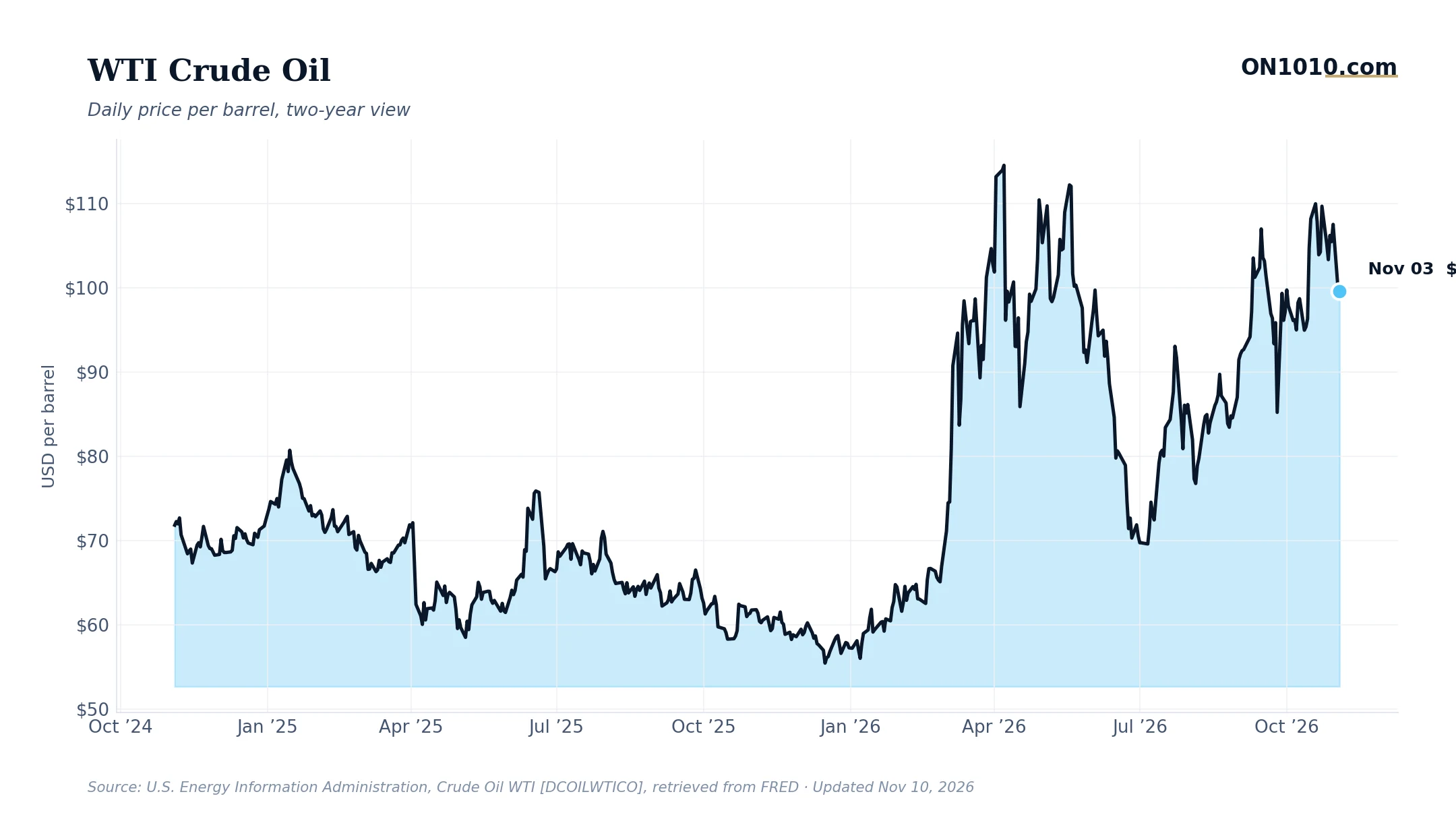
According to CNBC, President Trump declared that Iran “militarily is effectively over,” citing the destruction of its navy and what he described as collapsing economic conditions driven by surging inflation. He added that the conflict would end “fairly soon” and played down prospects of further military strikes. The headline sounds like a resolution. The market tells a different story.
Geopolitical de-escalation, in theory, should be unambiguously good news for energy markets and risk assets. When a major chokepoint threat recedes, the risk premium embedded in oil prices tends to compress. Supply routes relax, shipping insurance costs fall, and businesses that have been holding back capital commitments can start to move. That is the textbook response. But textbooks assume the rest of the backdrop is calm, and this one is not. Consumer sentiment sits near the bottom of its entire historical range. Credit spreads remain wide by historical standards, signaling stress in the credit markets that lend money to businesses and consumers alike. Monetary policy is restrictive, and core inflation is running hotter than roughly nine out of every ten months on record. The Fed has very little room to celebrate.
Here is the part that tends to get missed. Even if Trump’s characterization of Iran’s military collapse is accurate, economic damage rarely resolves as cleanly as military victories. Iran’s internal inflation crisis, if real, could produce political instability that creates entirely different categories of geopolitical risk in the region. And historically, when institutional investors are rotating this decisively toward defensive sectors, as they are right now, with health care and consumer staples both outperforming the broad market by double digits over the past month, it suggests the market is pricing risk that goes well beyond any single geopolitical headline.
Historically, investors have treated ceasefire signals as tradable but not durable until confirmed by a durable drop in energy volatility and a sustained tightening of credit spreads. Neither has happened yet.
Bottom Line: A war winding down is genuinely good news, but good geopolitical news landing inside a backdrop of elevated volatility, wide credit spreads, and persistent inflation tends to get digested more slowly than the headlines suggest.
Read more: CNBC Top News
ON1010 Research is an independent publisher of economic education and is not a registered investment adviser, broker-dealer, or investment company. This content is for educational and informational purposes only and is not investment advice or a recommendation to buy, sell, or hold any security. Published under the publisher exemption recognized by Section 202(a)(11)(D) of the Investment Advisers Act of 1940 (Lowe v. SEC). Always consult a qualified financial professional before making any financial decision.
Free Research
The economy moves fast. We make sure you move faster.
Economic data, policy shifts, and market signals — delivered to your inbox.
Subscribe Free