
When the Guns Quiet, Watch What Oil Does Next
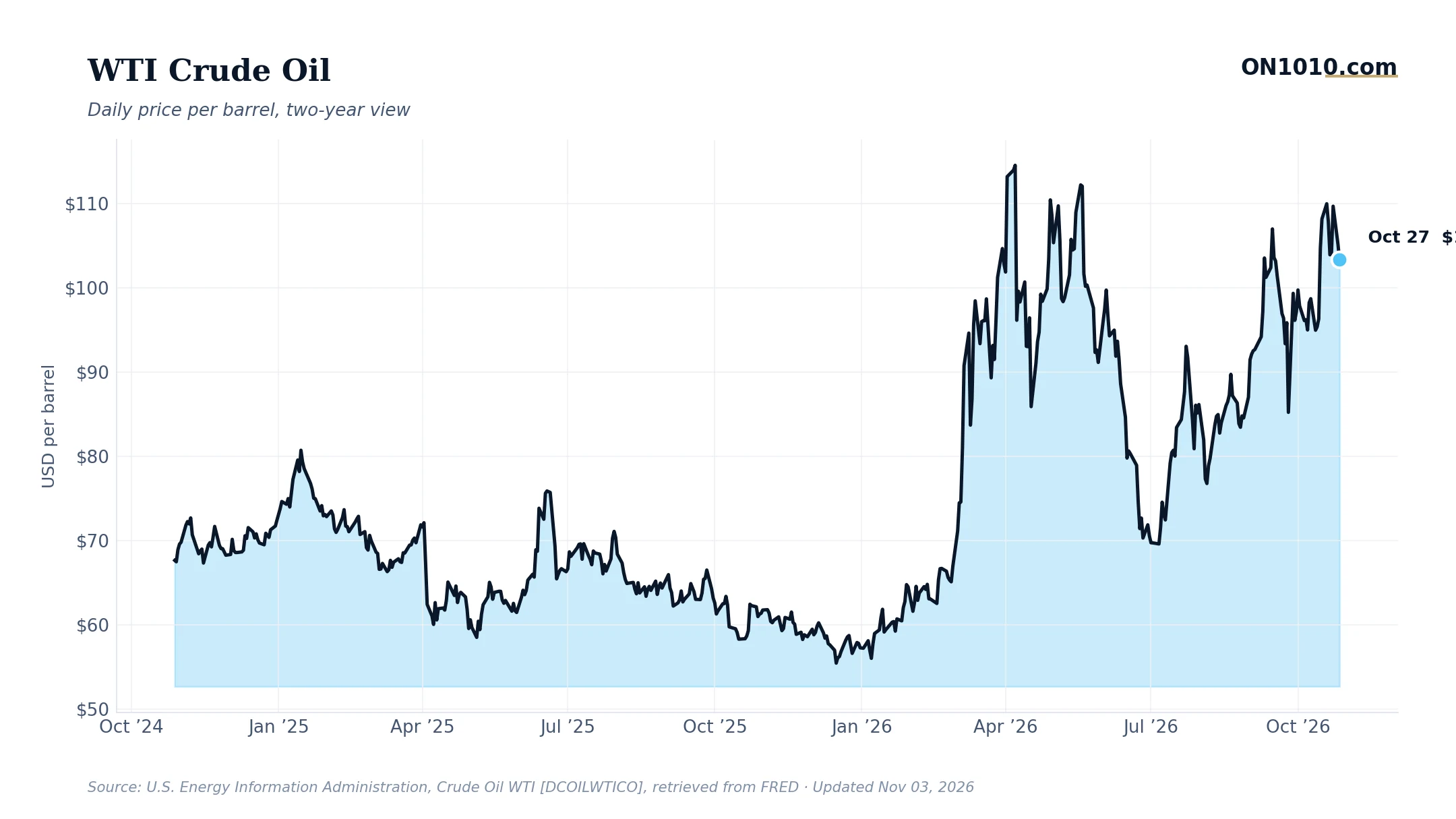
According to CNBC, crude oil prices fell for a second consecutive day after the U.S. and Iranian presidents both signaled openness to a diplomatic resolution to their active military conflict. The price drop is the market pricing in a lower probability of sustained supply disruption. What makes it interesting is the backdrop against which that signal arrived.
Crude is essentially a real-time polling mechanism for geopolitical risk. When traders believe a conflict will tighten supply, they bid prices up. When diplomacy looks credible, they sell the premium back out. Two consecutive days of declines suggests the market is taking these peace signals seriously enough to unwind some of the war risk that had been baked in. But “open to diplomacy” and “diplomatic resolution” are very different things, and the market has a long history of pricing in optimism before the hard negotiating even begins.
The broader economic context here deserves attention. Core inflation is already running hotter than roughly nine out of every ten months on record, and monetary policy remains restrictive. That combination leaves the economy with little cushion to absorb an oil shock if diplomacy stalls. Credit spreads have widened significantly in recent weeks, consumer sentiment is near historic lows, and defensive sectors like Consumer Staples and Health Care are outpacing the broader market by double digits. Money is positioned for durability, not growth. A genuine de-escalation in the Middle East would remove one of the more meaningful cost pressures currently squeezing corporate margins.
Historically, investors have treated geopolitical risk premiums in oil as among the most volatile and reversible. The pattern tends to go: shock, spike, partial diplomacy, give-back, and then a long grind lower if the resolution holds, or a violent re-spike if it doesn’t. The question this moment raises is whether the diplomatic signals are durable enough to keep the premium compressed, or whether this is simply a relief rally inside a conflict that has not actually ended.
Bottom Line: Oil falling on peace talk is the market doing exactly what it should. Whether that optimism holds depends entirely on whether the talks do.
Read more: CNBC Top News
ON1010 Research is an independent publisher of economic education and is not a registered investment adviser, broker-dealer, or investment company. This content is for educational and informational purposes only and is not investment advice or a recommendation to buy, sell, or hold any security. Published under the publisher exemption recognized by Section 202(a)(11)(D) of the Investment Advisers Act of 1940 (Lowe v. SEC). Always consult a qualified financial professional before making any financial decision.
Free Research
The economy moves fast. We make sure you move faster.
Economic data, policy shifts, and market signals — delivered to your inbox.
Subscribe Free